
Crawler crane lifting a tilt-up concrete wall panel at a warehouse project in Riverside, California
Inland Empire

NCCCO Crane Training in Riverside, California

Certification prep for Inland Empire operators and riggers setting tilt-up panels, steel and equipment across Riverside County.

The Inland Empire's Warehouse Boom

Riverside and its neighbors in the Inland Empire have become one of the country's largest logistics hubs. Huge distribution buildings, many built with tilt-up concrete walls, rise across the valley, along with the highways, interchanges and utility lines that serve them. March Air Reserve Base, the University of California, Riverside and steady housing growth add to the work.

For contractors here, NCCCO crane training in Riverside usually means certifying operators who set heavy panels, steel joists and rooftop equipment. The Crane School delivers that training on-site at your facility or at our training center in Seffner, Florida. We do not have a Riverside office.

Tilt-Up Lifts and Inland Heat

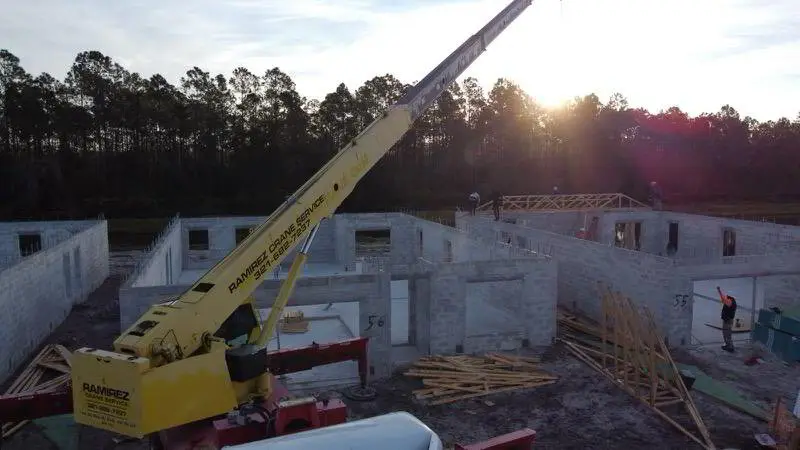
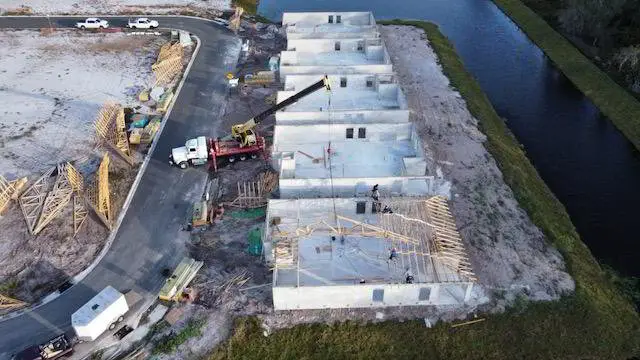
Lifting tilt-up panels is specialized work. Each panel is cast flat, then picked, rotated and set using a rigging system designed for that panel. Large crawler or truck cranes, long spreader systems and close coordination with bracing crews are the norm. Operators need to read load charts carefully, and riggers must understand how loads change as a panel tips from flat to vertical.

Summers in the Inland Empire are hot and dry, and Santa Ana winds can blow hard in fall and winter. Heat, fatigue and gusty conditions all factor into when panels get set and when crews stand down.

Many panel crews start before sunrise in summer to finish critical picks during the cooler, calmer part of the day. Operators who understand how wind acts on a large flat panel, and who are willing to halt a lift when gusts exceed the limits in the lift plan, protect the bracing crew working right beside the load. Our article on load calculations explains why chart discipline matters on these jobs.

Programs That Fit Inland Empire Projects

For operators

The mobile crane certification prep program covers NCCCO TSS, TLL and LAT exams, so lattice boom operators on large panel jobs are included. People with little or no experience can enter the field through the initial mobile crane operator training program, whose 5-week version adds lattice boom training.

For ground crews and warehouses

Panel crews benefit from Rigger Level I and II certification. Inside finished warehouses and on large sites, telehandlers handle much of the material movement, and those operators can prepare for the NCCCO THO exam.

Training in Riverside or Flying to Tampa

Contractors with several operators often choose on-site sessions. Our instructors run the classroom portion at your facility, and accredited examiners schedule practical exams on your equipment, provided you have a test area that meets NCCCO requirements. Large equipment yards common in the Inland Empire often work well.

Individuals typically fly from Ontario International, a short drive from Riverside, to Tampa International, then head about twenty minutes east to Seffner. CCO written exams are offered monthly at our headquarters. Our beginner's guide is useful reading for anyone starting out.

Warehouse owners and tenants also need certified operators after construction ends. Rooftop equipment replacements, racking installation and dock work all involve lifting. Facilities teams that run telehandlers or hire crane services should know what credentials to look for, which our Managing Crane Safety class helps supervisors understand.

California Rules to Check

California maintains crane operator requirements at the state level on top of OSHA's federal standard. Before operating in Riverside County or elsewhere in the state, confirm the current rules with Cal/OSHA and NCCCO's state licensing information. Our California statewide page has more.
Frequently Asked Questions

Which NCCCO certification covers tilt-up panel cranes?

It depends on the crane. Lattice boom crawlers and truck cranes fall under LAT, while telescopic boom cranes fall under TSS or TLL. Certification is by crane type.

Can I start a crane career in Riverside with no experience?

Yes. Our initial 3-week and 5-week programs in Seffner are designed for beginners and include NCCCO written and practical exams.

Do Inland Empire warehouse telehandler operators need certification?

Employer and project requirements vary. NCCCO THO certification is a common way for telehandler operators to show competence.

The Crane School

Training Programs & Services

All programs are delivered in compliance with current OSHA regulations.

Mobile Crane Operator Certification Prep Program

For experienced operators ready to certify or recertify. Includes NCCCO TSS, TLL and LAT written and practical exams.

Learn more about Mobile Crane Certification Prep

Initial Mobile Crane Operator Training Program

For people with little or no crane experience. 3-week (TSS/TLL) and 5-week (adds LAT) programs with NCCCO exams.

Learn more about Initial Mobile Crane Training (3 & 5 Week)

Articulating Crane Operator Certification Prep Program

For knuckle-boom operators. Prepares you for the NCCCO ABC, ABL and ABW written and practical exams.

Learn more about Articulating Crane Certification Prep

Rigger Qualification / Certification Program

For personnel who rig loads to cranes — supports your rigger qualification and NCCCO Rigger Level I/II exams.

Learn more about Rigger Level 1 & 2

Signalperson Qualification / Certification Program

Standard hand and voice signals for directing cranes, plus preparation for the NCCCO Signalperson exams.

Learn more about Signalperson

Managing Crane Safety Class

For managers and supervisors: OSHA compliance, lift planning, inspections, certification and liability.

Learn more about Managing Crane Safety

Telehandler Operator Program

Certification or recertification for telehandler operators. Includes the NCCCO THO written and practical exams.

Learn more about Telehandler Operator

Crane Inspection Services

Annual, monthly, post-assembly and post-incident inspections plus load testing by NCCCO-certified inspectors.

Learn more about Crane Inspections

Related Reading

Training Program

Telehandler Operator Certification Program

Telehandler certification prep for the NCCCO THO written and practical exams, fixed or rotating. Certify or recertify. Join the list for upcoming dates.

Crane Operator Practice Test

Ten quick questions on crane safety rules and NCCCO basics. Pick one answer per question — your score shows on the next page.

1. Which OSHA standard covers cranes and derricks used in construction?
2. How long is an NCCCO crane operator certification valid before recertification?
3. What does NCCCO stand for?
4. Under OSHA's current construction crane rule, operator certification must be obtained by:
5. Under OSHA Table A (1926.1408), what is the minimum clearance from power lines rated up to 50 kV?
6. When is a signal person required?
7. Whose emergency stop signal must a crane operator obey?
8. What does an anti-two-block device prevent?
9. Which document gives a crane's rated capacity for a given boom length and radius?
10. Which NCCCO designation covers telescopic boom cranes with a swing cab?