
Lifting in a Dense, Hilly City
San Francisco packs a lot of construction into a small, steep footprint. High-rise residential and office towers, hospital and university buildings, seismic retrofits and transit projects share streets with heavy traffic and pedestrians. Across the Bay Area, the Port of Oakland, bridge work and large technology and research campuses keep cranes busy too.
The Crane School supports NCCCO crane training in San Francisco through on-site sessions at employer facilities and open-enrollment classes at our only campus, in Seffner, Florida. We have no Bay Area office; our instructors and accredited practical examiners travel to you.
Slopes, Street Closures and Afternoon Wind
Setting up a mobile crane on a San Francisco street can mean working on a grade, over basements or utility vaults, and inside a tightly permitted closure window. Operators need to judge level and ground bearing carefully and plan cribbing to match. Afternoon sea breezes and gusty wind through the city's corridors can push loads with large surface areas, while fog reduces visibility on some mornings.
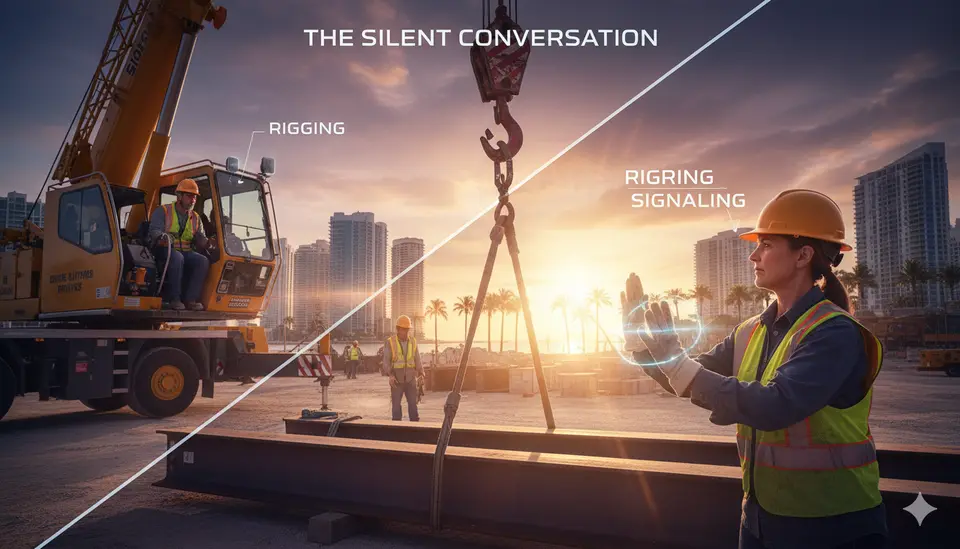
Most downtown picks are at least partly blind. That makes communication between operator and ground crew the core safety skill, and it is why we encourage Bay Area employers to certify signalpersons alongside operators.
Seismic retrofit work adds another twist. Crews may be lifting heavy steel braces or new structural members into existing buildings, sometimes through openings cut in walls or roofs, with very little clearance. Careful rigging, tag line control and a clear plan for every step of the pick prevent damage to the structure and injuries to the crew.
Matching Programs to Bay Area Crews
- Signalpersons guiding blind picks between buildings: signalperson qualification and certification
- Riggers handling curtain wall, steel and mechanical equipment: Rigger Level I and II through our rigger program
- Experienced mobile crane operators renewing or earning TSS, TLL or LAT: mobile crane certification prep
- Superintendents and safety managers responsible for lift plans: the Managing Crane Safety class
For background on how signals and rigging work together, see our article on the arts of rigging and signaling.
On-Site Sessions and Travel Options
Downtown job sites rarely have room for an NCCCO practical course, so Bay Area employers usually host training at an equipment yard or shop. Our instructors handle classroom work there, and practical exams can be scheduled on your cranes when the area meets NCCCO requirements.
For individuals, flights from San Francisco International or Oakland International, direct or connecting, reach Tampa International. From the Tampa airport, Seffner is about twenty minutes east. CCO written exams are held monthly at our headquarters, and the prep program runs over a single Friday-to-Monday stretch. If you want extra time on a crane similar to your test machine, book one of the optional one-hour practice slots on the Thursday before. Florida heat and humidity can be a surprise after the Bay Area's cool summers, so pack accordingly.
Operators who split their time between San Francisco and South Bay or East Bay projects often run several crane sizes. Because certification is by crane type, review which machines each person actually operates before scheduling exams. Testing on the right crane the first time saves a second trip and a second exam fee.
Licensing in California
California sets crane operator requirements at the state level in addition to OSHA's federal rules. Confirm current rules with Cal/OSHA and review NCCCO's state licensing information before you run a crane in San Francisco. For statewide details, visit our California crane school overview.