Northern Colorado's Growing Job Sites
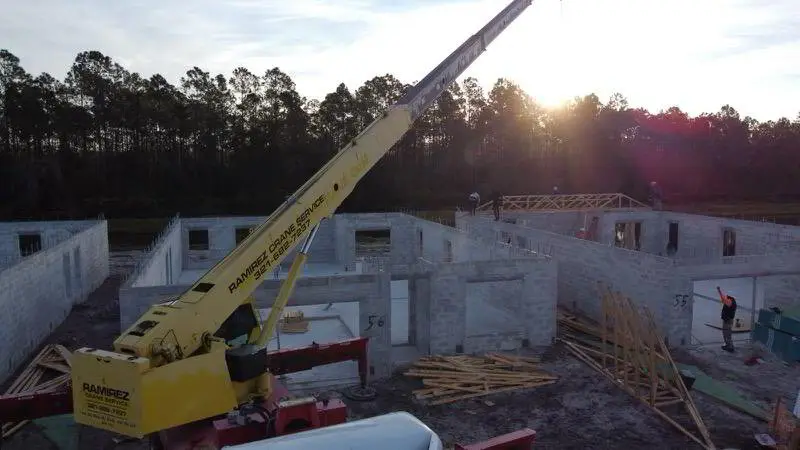
Fort Collins is home to Colorado State University and sits along the busy I-25 corridor between Denver and Cheyenne. The region mixes campus construction, manufacturing and food processing, agricultural operations on the plains to the east, and steady residential and commercial growth across Larimer and Weld counties. Each brings different lifts, from precast and steel on campus to bins, conveyors and equipment at agricultural facilities.
The Crane School offers crane operator training in Fort Collins through on-site sessions at employer facilities and open-enrollment classes at our training center in Seffner, Florida. We do not have a Northern Colorado office.
Knuckle Booms, Boom Trucks and Ag Lifts
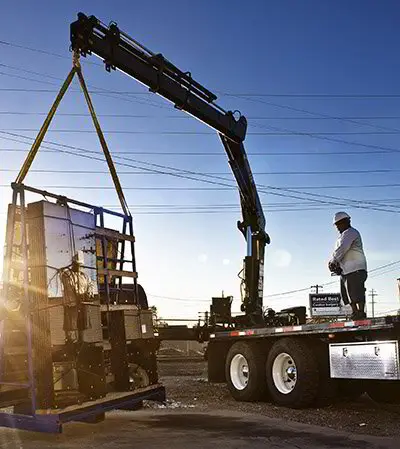
Much of the lifting in Northern Colorado happens on trucks rather than large mobile cranes. Building-supply yards deliver with knuckle booms, equipment dealers and ag service companies run boom trucks, and contractors use telehandlers on nearly every site. Matching certification to the machine saves time and money.
The articulating crane prep program prepares operators for NCCCO ABC, ABL and ABW exams. Telescopic boom trucks typically fall under TSS, covered in our mobile crane certification prep, and telehandler operators can test for THO. Our guide to knuckle boom certification goes into more detail.
Wind, Hail and Plains Weather
Northern Colorado's open terrain lets wind build with little to slow it, and spring and summer storms bring hail and lightning. Winter can swing from mild chinook days to hard freezes within a week. For operators, that means checking forecasts and on-site wind readings before every critical lift, inspecting equipment after hail, and paying attention to ground that freezes and thaws.
Operators renewing their five-year CCO cards should schedule recertification in the final year, ideally during a slower season so the timing does not collide with peak construction.
Agricultural and food processing sites bring their own hazards: grain dust, tall bins and legs, overhead conveyors and power lines running across open fields. OSHA's power line safety rule in 1926.1408 is especially relevant for operators who move between farms, feedlots and rural utility work.
How to Train from Fort Collins
If you have several operators, on-site training at your shop or yard is usually the most efficient route. Our instructors handle classroom work, and accredited practical examiners can schedule NCCCO exams on your equipment when the site meets test requirements.
Individuals typically drive about an hour to Denver International and fly to Tampa International. Seffner is a short drive east of the Tampa airport. CCO written exams are held monthly, and the class schedule lists upcoming dates. Students coming from Colorado State University or a first construction job who have little seat time should look at the initial 3-week or 5-week course rather than the weekend prep format, since those programs build skills from the ground up before the exams.
Smaller Northern Colorado companies with only one or two candidates can still benefit from on-site sessions by teaming up with another local employer. Pooling candidates makes a visit more practical, as long as there is a suitable test area and the right equipment available for each exam.
Colorado and Wyoming Requirements
Neither Colorado nor neighboring Wyoming has a separate state crane operator license, so federal OSHA rules apply in both, including certification under 29 CFR 1926.1427. Employers may set stricter requirements. Our Colorado crane school page has more statewide details.