Hawaii's Extra Layer of Crane Requirements
Hawaii is among the states commonly cited for having its own crane operator requirements. Workplace safety is enforced by the Hawaii Occupational Safety and Health Division (HIOSH), an OSHA-approved state plan whose rules must be at least as effective as federal OSHA. The federal construction crane standard, 29 CFR 1926 Subpart CC, provides the baseline, including accredited operator certification under 1926.1427.
Because Hawaii's details are the state's to define, confirm current requirements with HIOSH and NCCCO's state licensing information before you operate. For most operators, Hawaii crane operator certification begins with passing NCCCO's written and practical exams, which our programs are built to prepare you for. The certification itself comes from NCCCO; our role is the training.
A Long History With Hawaii Employers
Hawaii is a place where our instructors have worked for many years. Organizations we have trained for include Hawaiian Electric, and Hawaii customers have shared their experience with us. Benjamin Pila of the City & County of Honolulu wrote: “The City & County of Honolulu has received excellent information and training from ‘THE CRANE SCHOOL’ in preparation for the NCCCO written and practical examinations.”
Linda Goldstein of Ameron International in Honolulu noted: “For over a decade, Ameron Hawaii personnel have been trained by The Crane School.” Those relationships are built on on-site training, which is how we serve the islands.
What Gets Lifted in the Islands
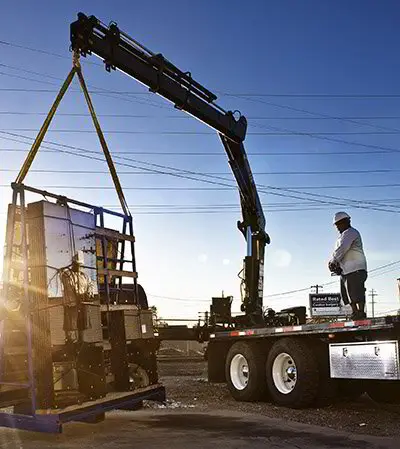
Hawaii's crane work follows its economy. Honolulu Harbor and the neighbor-island harbors receive most of the goods the state uses, so port and cargo lifting never stops. Hotel and resort construction and renovation, high-rise work in urban Honolulu, military facilities, and public infrastructure all need cranes. Utilities rely on boom trucks and mobile cranes to maintain power and communication lines across rugged terrain.
The environment matters too. Steady trade winds affect lift planning, salt air accelerates corrosion on wire rope and steel, and moving a crane between islands means barging it. Every one of those factors raises the value of operators who inspect carefully and plan well.
Island logistics also affect how training is planned. If a crane is needed for a practical exam, it may already be committed to a job or sitting on another island. We work with employers to find a window when suitable equipment and a test area are available, so exam day happens on schedule.
On-Site Training on Oahu and the Neighbor Islands
For Hawaii employers, on-site training is usually the clear choice. Our instructors travel to your yard on Oahu or a neighbor island, train on the equipment your crews actually use, and our NCCCO Accredited Practical Examiners can hold practical exams at your location. Your people avoid a long mainland trip, and your cranes stay in service.
Some candidates struggle with written tests, especially when English is not their first language or they have been away from a classroom for years. Our instructors are used to explaining load charts and regulations in plain terms, and on-site classes give them time to work with each person.
A single visit can also cover more than operators. Riggers, signalpersons and supervisors can be scheduled during the same trip, which is especially helpful when the cost of travel to the islands is shared across a larger group.
If You Would Rather Come to Florida
Individual operators can also travel to our only campus, in Seffner, Florida, near Tampa. Open-enrollment classes follow a published calendar, and NCCCO written exams are offered every month there. It is a long trip from Hawaii, so it tends to suit operators who want a multi-week beginner course or who have no employer-hosted option.
Program fit is the same wherever you train. Experienced operators usually need the mobile crane operator certification prep program. Utility and sign crews on knuckle boom trucks fit the articulating crane certification prep. Ground crews benefit from the signalperson qualification and certification program and rigger training.
Building a Crane Career in Hawaii
Hawaii operators who hold NCCCO certification, any required state credential and a second specialty such as rigging or articulating cranes are better positioned when projects shift between islands. Track your expiration dates: CCO certifications last five years.
For wage information in Hawaii, see the U.S. Bureau of Labor Statistics Occupational Employment and Wage Statistics for crane and tower operators (53-7021). To make the most of an on-site program, read our tips for onsite crane training before your class begins.
Because projects in Hawaii can be spread across several islands, an operator who is comfortable with barge moves, tight resort sites and harbor work brings more flexibility to an employer.