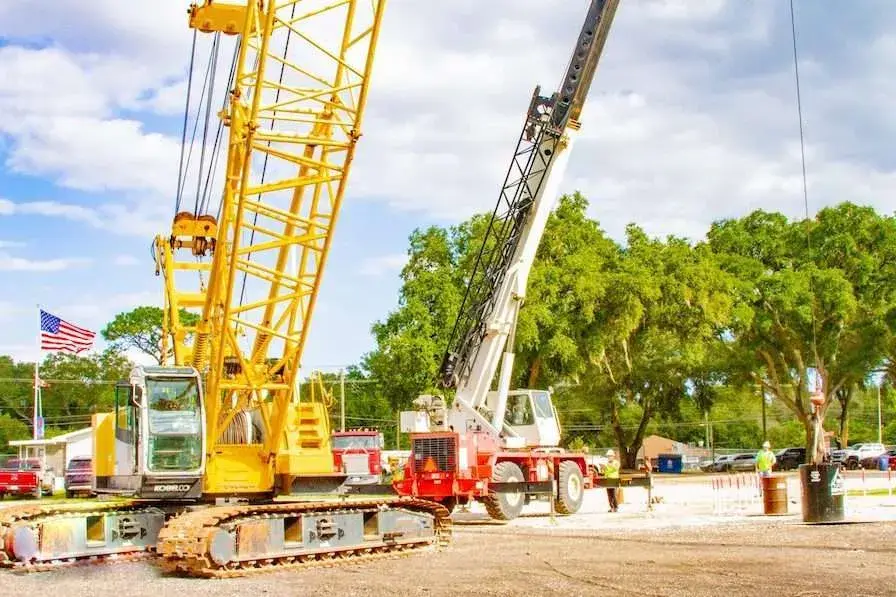
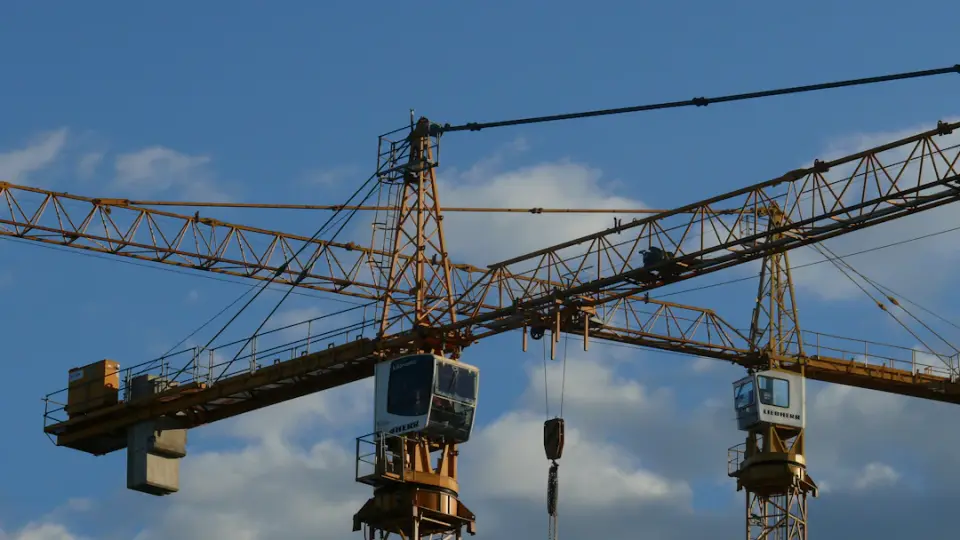
Mobile crane lifting mechanical equipment onto the roof of a converted brick mill in Lewiston, Maine
Lewiston, Maine

Lewiston NCCCO Crane, Rigging and Signal Training

Certification prep for crews renovating Lewiston's mill buildings and building its newer projects, available on-site or at our Florida center.

Old Mills, New Uses

Lewiston grew as a textile mill city on the east bank of the Androscoggin River, and many of its large brick mill buildings have been or are being converted to offices, housing and commercial space. Those renovations bring cranes into tight downtown blocks to lift steel, mechanical units and materials onto and into century-old structures. Hospital work, Bates College projects and public infrastructure add to the city's construction activity.

The Crane School supports Lewiston crews with crane training at your site or through open-enrollment classes at our training center in Seffner, Florida. We have no Lewiston office.

Lifting Into and Over Historic Buildings

Renovation lifts are rarely simple. Loads may go over rooftops to an interior courtyard, through openings cut into old masonry, or onto roofs whose capacity has to be confirmed. The operator often cannot see the landing point, sidewalks and streets may need to be closed, and the surrounding buildings are occupied.

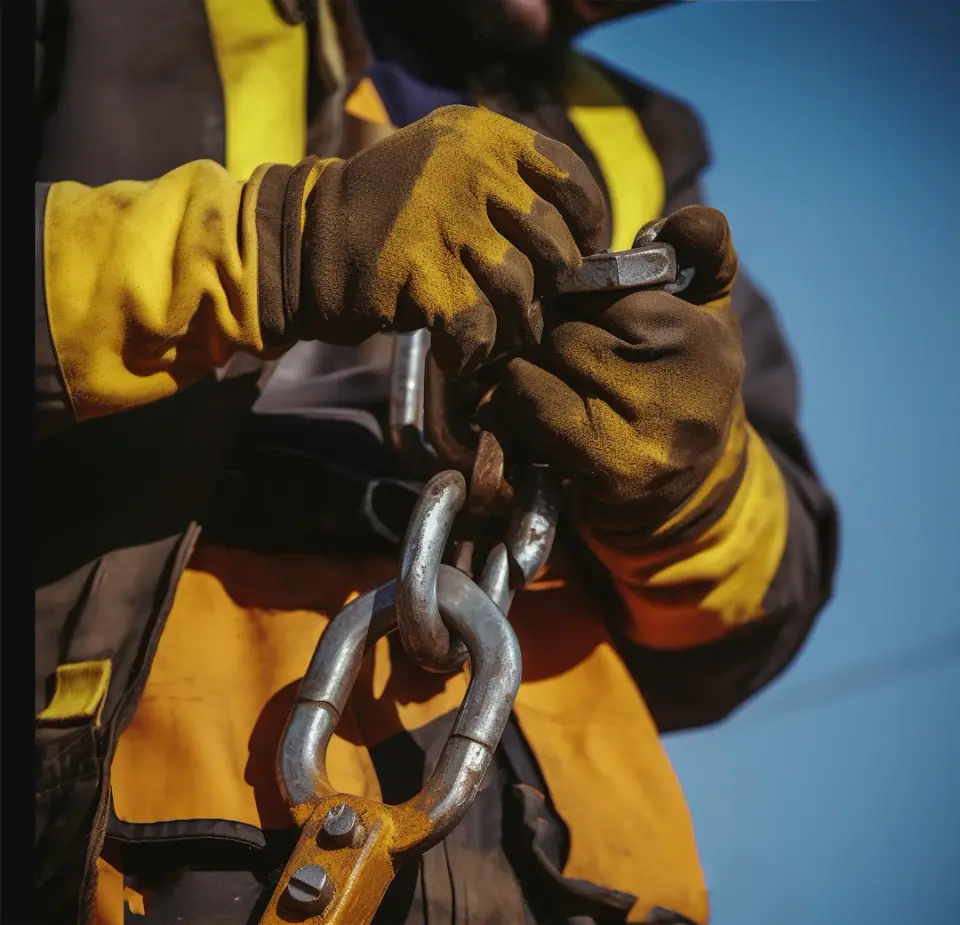
These jobs depend on the people on the ground. A qualified signalperson directs the blind portion of the lift, and qualified riggers make sure odd-shaped loads are balanced and secured. Our signalperson qualification and certification program and rigger program prepare candidates for NCCCO written and practical exams, and both pair well with operator training for renovation contractors.

Operator Paths for Lewiston Crews

Contractors with experienced hydraulic crane operators can send them through the monthly mobile crane certification prep for TSS, TLL and LAT. If you are hiring someone new to the trade, the three- or five-week initial program in Seffner builds skills from scratch.

Superintendents and project managers who plan complex lifts on renovation jobs will get value from the Managing Crane Safety class, which covers OSHA compliance, lift planning, inspections and liability. Many of the lifts on these sites qualify as critical in practice, even when no rule labels them that way.

Seasons, Snow and Scheduling

Lewiston winters bring snow and ice that complicate downtown lifts, from icy roofs at the landing point to snowbanks that limit outrigger placement on narrow streets. Spring thaw and mud season then change ground conditions again. On-site practical work is easiest to plan between late spring and early fall, while classroom sessions can happen year-round.

Operators who need certification in winter can travel to our Seffner center. CCO written exams are offered there every month, and dates are on the class schedule.

Maine Requirements

Maine is not on the commonly cited list of states with their own crane operator licensing, so federal OSHA rules govern. OSHA's 29 CFR 1926.1427 requires construction crane operators to be certified by crane type, and 1926.1428 requires signalpersons to be qualified. Owners and general contractors may require more. Our Maine overview has further detail.

Renovation contractors working across the river in Auburn, or elsewhere in Androscoggin County, can train together in a single on-site session. Grouping crews from related projects reduces cost per person and puts everyone on the same signals and rigging practices, which matters when people move between sites from week to week. When you call, tell us how many operators, riggers and signalpersons you have, and we will propose a schedule that fits around your project milestones.

Frequently Asked Questions

Do signalpersons on Lewiston renovation projects need certification?

OSHA requires signalpersons to be qualified, either through a third-party qualifier such as NCCCO or an employer's qualified evaluator. Many general contractors prefer NCCCO certification.

Can you train our crew at our downtown job site?

Classroom sessions can be held almost anywhere. Hands-on practice and practical exams need a safe, open area, which may mean using your yard instead of a tight downtown site.

What is the difference between rigger Level I and Level II?

Level I covers basic rigging tasks where loads and rigging are identified for the rigger. Level II covers more complex tasks requiring the rigger to determine weights, centers of gravity and rigging configurations.

The Crane School

Training Programs & Services

All programs are delivered in compliance with current OSHA regulations.

Mobile Crane Operator Certification Prep Program

For experienced operators ready to certify or recertify. Includes NCCCO TSS, TLL and LAT written and practical exams.

Learn more about Mobile Crane Certification Prep

Initial Mobile Crane Operator Training Program

For people with little or no crane experience. 3-week (TSS/TLL) and 5-week (adds LAT) programs with NCCCO exams.

Learn more about Initial Mobile Crane Training (3 & 5 Week)

Articulating Crane Operator Certification Prep Program

For knuckle-boom operators. Prepares you for the NCCCO ABC, ABL and ABW written and practical exams.

Learn more about Articulating Crane Certification Prep

Rigger Qualification / Certification Program

For personnel who rig loads to cranes — supports your rigger qualification and NCCCO Rigger Level I/II exams.

Learn more about Rigger Level 1 & 2

Signalperson Qualification / Certification Program

Standard hand and voice signals for directing cranes, plus preparation for the NCCCO Signalperson exams.

Learn more about Signalperson

Managing Crane Safety Class

For managers and supervisors: OSHA compliance, lift planning, inspections, certification and liability.

Learn more about Managing Crane Safety

Telehandler Operator Program

Certification or recertification for telehandler operators. Includes the NCCCO THO written and practical exams.

Learn more about Telehandler Operator

Crane Inspection Services

Annual, monthly, post-assembly and post-incident inspections plus load testing by NCCCO-certified inspectors.

Learn more about Crane Inspections

Related Reading

Crane Operator Practice Test

Ten quick questions on crane safety rules and NCCCO basics. Pick one answer per question — your score shows on the next page.

1. Which OSHA standard covers cranes and derricks used in construction?
2. How long is an NCCCO crane operator certification valid before recertification?
3. What does NCCCO stand for?
4. Under OSHA's current construction crane rule, operator certification must be obtained by:
5. Under OSHA Table A (1926.1408), what is the minimum clearance from power lines rated up to 50 kV?
6. When is a signal person required?
7. Whose emergency stop signal must a crane operator obey?
8. What does an anti-two-block device prevent?
9. Which document gives a crane's rated capacity for a given boom length and radius?
10. Which NCCCO designation covers telescopic boom cranes with a swing cab?