Auburn's Contractors and Delivery Fleets
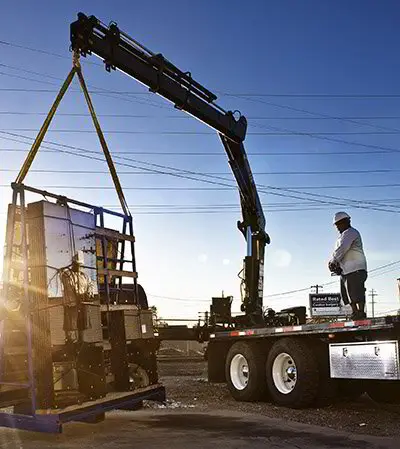
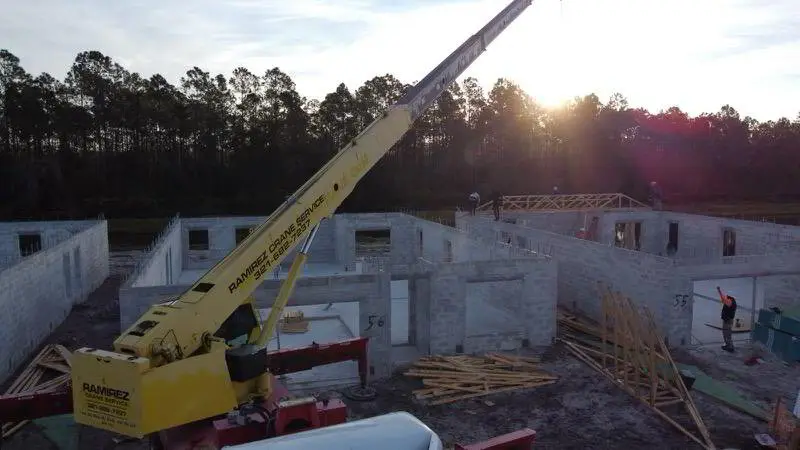
Across the river from Lewiston and close to the Turnpike, Auburn's lifting is done mostly by outfits running two or three trucks, not by big crane fleets. Building-supply yards deliver trusses and wallboard with knuckle boom trucks. Sign, roofing, HVAC and well contractors set equipment with boom trucks, and excavation outfits occasionally rent a hydraulic crane for bigger picks.
Those shops can get crane operator training from us in one of two forms: we come to the yard, or the operator flies down for a public class in Seffner, Florida. We have no Maine office; our Florida staff handles every booking.
Boom Trucks and Knuckle Booms
Delivery cranes do a lot of lifting in residential neighborhoods and on commercial sites, often with the driver operating alone from the remote control or the truck's stand. That makes setup, load-chart reading and power line awareness the operator's responsibility from start to finish.
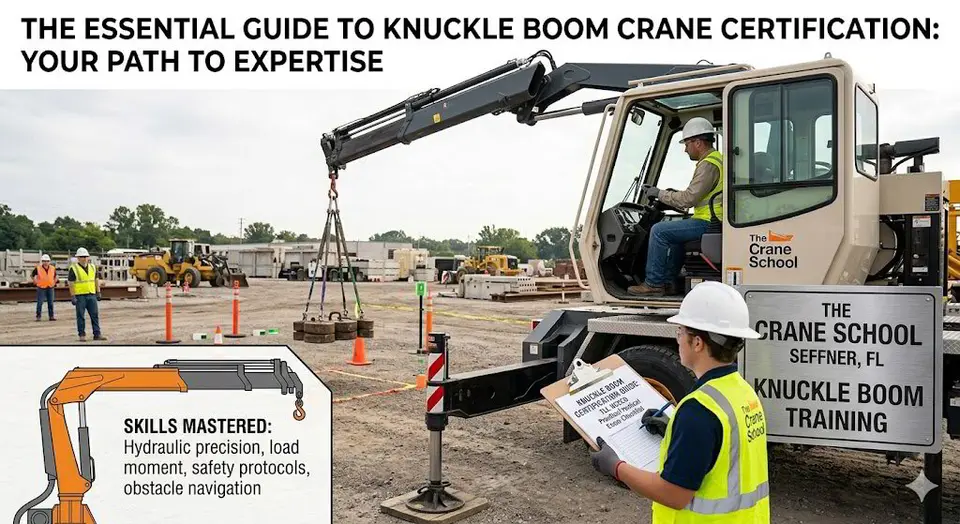
Knuckle boom drivers work toward NCCCO ABC, ABL and ABW in our articulating boom exam prep. A straight telescopic boom truck is a different animal, and its operators prep for TSS and TLL in the mobile crane track. Can't tell where your rig fits? Give us the make and model and we will sort it out.
Making On-Site Training Work for a Small Company
A one- or two-truck company may wonder whether on-site training is practical. It can be, especially if you combine your crew with employees from another company or schedule several renewals in the same visit. An accredited examiner from our staff can give the practical on your truck, so the card reflects the exact machine your driver uses every day.
If a visit just doesn't pencil out, one operator can fly south and join a calendar class. Those classes include a Friday-to-Monday certification prep held monthly, and the CCO written test comes around just as often. Look for open dates on the training calendar.
Maine Winters and the Short Season
Snow and ice stick around for months in central Maine, making footing treacherous and machines balky. Outriggers on frozen ground can settle when the ground softens in spring, and mud season brings its own setup problems on unpaved sites. When temperatures plunge, hydraulics turn sluggish, controls get stiff and wire rope needs closer watching.
For an outdoor session in Auburn, the window between late May and September is usually the easiest to work with. If an operator needs certification over the winter, Florida's open-enrollment classes offer outdoor practice in milder conditions. For a place to stay near the school, see our lodging page.
Maine Requirements
Maine is not on the commonly cited list of states with their own crane operator licensing, so federal OSHA rules govern. Section 1926.1427 of 29 CFR requires type-specific certification from an accredited body like NCCCO for construction crane operators, and that reaches plenty of boom trucks on construction jobs. Your customers and GCs are free to set a higher bar. Read our statewide Maine page for the longer explanation.
For small companies, the practical question is often what customers expect. On commercial sites, GCs more and more often want to see a card before a delivery truck swings a single bundle. Having a current CCO card on file avoids turning a routine drop-off into a lost day, and it gives your operator documented training that supports safe habits on every job, not just the ones where someone checks.