
What Maine Crane Certification Means Under Federal OSHA
Maine does not have a widely cited state crane operator license, so private construction work follows federal OSHA's Cranes and Derricks in Construction standard, 29 CFR 1926 Subpart CC. That rule, in section 1926.1427, expects operators to hold certification from an accredited program for each type of crane they run. NCCCO is the program Maine general contractors, steel erectors and crane rental companies typically recognize, which makes Maine crane certification largely a matter of passing the right CCO exams.
Employers can go further. Shipyards, utilities and paper mills often write their own qualification requirements on top of OSHA, and a few owners require certifications that match the specific crane configuration on site. Ask your employer what it expects before you choose an exam. Boom truck operators should pay special attention here, because a knuckle boom on a lumber truck and a telescopic boom truck fall into different NCCCO categories, and the card has to match the machine.
One point that confuses newcomers: the testing body issues the certification. The Crane School trains and prepares you, and our accredited examiners can administer CCO practical exams, but the card comes from NCCCO.
Shipyards, Mills and Bridges: Where Maine Lifts Happen
Maine's coast has a long history of naval and commercial shipbuilding, and yard work involves heavy module lifts, tight clearances and constant coordination between operators, riggers and signalpersons. Port work in Portland and smaller harbors adds cargo handling and marine construction.
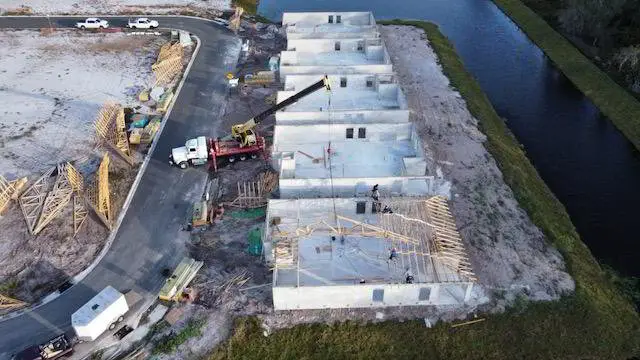
Inland, forest products and paper mill maintenance call for cranes during outages and equipment replacements. Bridge replacement along the coastal and river crossings, utility transmission upgrades and commercial building in the Portland area keep mobile cranes and boom trucks moving. Building-supply dealers and log truck operators across the state rely on knuckle boom cranes for daily deliveries and loading.
The common thread is weather. Freeze-thaw cycles, ice on rigging and short winter daylight all change how a lift is planned, and operators who respect those conditions stay employed.
Use the Off-Season to Get Certified
Maine's building season is compressed, so many employers schedule certification when work slows down in winter. You have two ways to do it.
Host the training at your yard
With on-site training, our instructors come to your facility anywhere in Maine and teach on your equipment, and our accredited practical examiners can schedule CCO practical exams on location. This works well for a shipyard department, a mill maintenance team or a crane rental company certifying several operators at once. When you book, we will talk through the cranes, rigging gear and open, level space needed for practice and practical testing, so the week is not lost to logistics. Indoor classroom sessions keep moving even when a snow squall pauses work outside.
Travel to Seffner, Florida
Individuals can join open-enrollment classes at our facility east of Tampa, where CCO written exams are offered every month. Multi-week beginner courses run full-time, Monday through Thursday from 7:00 AM to 4:00 PM. Check the class schedule and plan around Maine's slower months.
Matching Programs to Maine Equipment
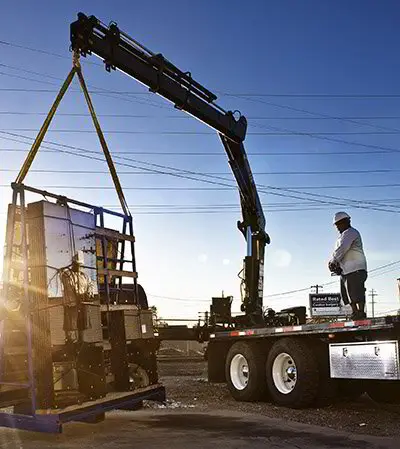
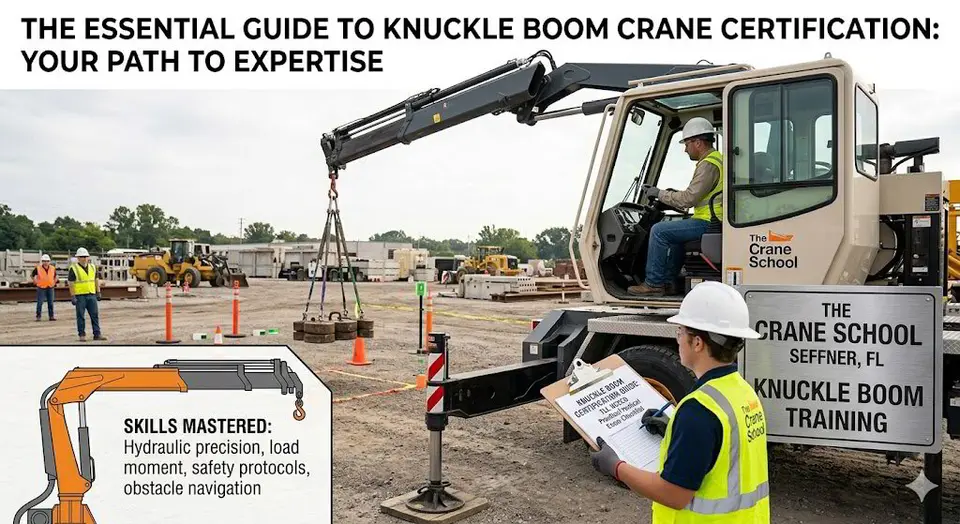
Boom trucks with articulating cranes are everywhere in Maine, from lumber yards to roofing suppliers. Operators of those machines should look at the articulating crane certification prep program, which prepares candidates for the NCCCO ABC, ABL and ABW exams. Our article on knuckle boom crane certification explains how those categories differ.
If you are new to cranes and want to move from laborer or deckhand to operator, the initial mobile crane operator training program offers 3-week and 5-week tracks that include NCCCO exams. Shipyard and mill crews that mostly hook loads and direct lifts may get more value from rigger and signalperson qualification than from operator certification.
Planning a Long Career in Maine
A crane career in Maine often means working several kinds of jobs across a year: marine work in summer, plant outages in shoulder seasons and indoor maintenance in winter. Holding more than one certification makes that rotation easier, and it gives you something to offer a new employer if a seasonal job ends early. Operators who also understand rigging and signaling are often the first ones called back in spring.
We do not publish wage figures. The U.S. Bureau of Labor Statistics tracks pay for crane and tower operators (occupation 53-7021) in its Occupational Employment and Wage Statistics (opens in a new tab), including state-level estimates. Keep track of your five-year recertification date, and read about why ongoing operator training matters between renewals.