
Lifting Work in the Pine Belt
Hattiesburg is the hub of Mississippi's Pine Belt, a region shaped by forestry and wood products. Mills and processing plants, distribution centers along the I-59 corridor, the University of Southern Mississippi and regional hospitals all keep cranes and material handlers busy. The area also sees heavy highway and bridge work, and storms moving inland from the Gulf can bring wind damage and cleanup.
That range of work means NCCCO crane training for Hattiesburg crews often covers several machine types within one company: a boom truck for deliveries, a telehandler on construction sites, and a hydraulic crane for plant maintenance. Each of those machines has its own NCCCO exam, and a worker certified on one is not automatically covered on another.
Choosing a Program by Equipment
Knuckle-boom trucks
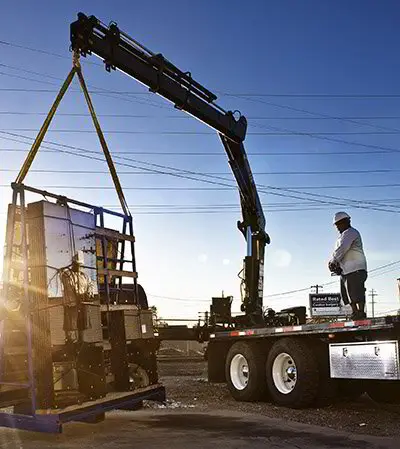
Timber and building-supply businesses rely heavily on articulating cranes. Pine Belt knuckle-boom hands typically aim for ABC, ABL or ABW, and our articulating crane prep covers both halves of each NCCCO test.
Telehandlers
Rough-terrain telehandlers are a fixture for general contractors and in-plant maintenance teams. Their credential is the NCCCO THO, and the telehandler program is where they get ready for it.
Hydraulic and lattice boom cranes
Hydraulic and lattice operators with real seat time, whether chasing TSS, TLL or LAT or renewing a five-year card, fit the monthly mobile crane prep.
If someone runs more than one of these, each certification is separate, so plan for each exam.
Two Ways to Train
Everything we do is run out of one place: Seffner, Florida, on the east side of Tampa. Forest-products companies and contractors around Hattiesburg with a group of candidates can have instructors and an accredited examiner show up at their own gate for classes and NCCCO practicals.
Someone certifying alone can head to Florida for an open class, by car or by plane. New-operator programs fill four weekdays, Monday to Thursday, and there is a CCO written exam date on campus every month. For Pine Belt residents, the drive east along the Gulf Coast and into Florida is long but manageable; many people prefer that to connecting flights. Check the class calendar before you plan the trip.
Federal Rules in Mississippi
Mississippi has no commonly cited crane operator license of its own, so the federal standard is the one that counts here. For building and road jobs, 1926.1427 requires a separate credential for every type of crane in an operator's rotation. Mills and plants frequently go beyond that and turn away any operator who cannot show an NCCCO card at the gate. See our Mississippi training overview for more.
Preparing for the Written Exams
Experienced operators often stumble on load charts, particularly after years on one machine without working out deductions by hand. Work through charts for each crane type you intend to test on, and brush up on signals and core OSHA rules. For study habits that help, read our first-attempt NCCCO exam tips.
For the practical exam, seat time on the right machine is what counts. If you test in Seffner, Thursday before prep weekend is open for optional practice, booked by the hour. Crews certifying on-site have the advantage of testing on equipment they already know, so the focus can stay on smooth control and staying inside the course.
Your kit list: hard-toe boots, a hard hat, gloves and field clothes, plus government-issued photo ID and a driver's license in good standing.