
What Las Cruces crews lift
Las Cruces is New Mexico's second-largest city, set in the Mesilla Valley along the Rio Grande with the Organ Mountains to the east. It is home to New Mexico State University and surrounded by irrigated farmland known for pecans and chile. Campus and healthcare construction, residential growth, agricultural facilities and public works all need lifting crews.
Crane operator training in Las Cruces, NM is delivered by The Crane School either on-site at your facility or at our training center in Seffner, Florida. We have no office in New Mexico, and NCCCO, not The Crane School, issues the certification.
Matching programs to valley work
Campus and commercial builders
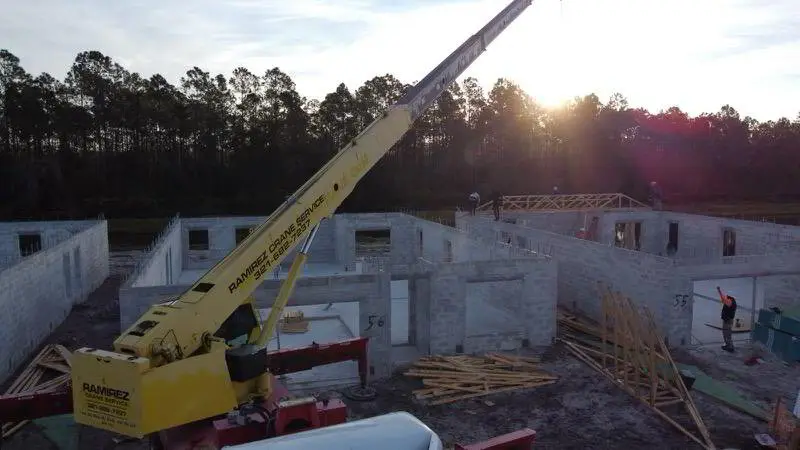
Telescopic hydraulic cranes set steel, precast and rooftop equipment on institutional and commercial sites. Experienced operators can prepare for TSS and TLL through the mobile crane certification prep program.
Farm and processing operations
Pecan and chile operations, packing sheds and irrigation districts often rely on telehandlers and boom trucks. The telehandler operator program prepares candidates for NCCCO THO.
Hook-up and signal crews
On busy campus projects, the operator often depends on a signalperson. Signalperson certification prep teaches standard hand and voice signals for those roles.
Desert heat and dust
Southern New Mexico summers are long and hot, with intense sun, dust storms and afternoon monsoon thunderstorms that can bring lightning and sudden wind. Winters are mild, which makes the cooler months a good time for on-site practical sessions.
Our instructors cover wind limits, lightning procedures and heat awareness alongside load chart work. Those topics show up on exams and, more importantly, on the job.
Dust deserves its own mention. Blowing sand reduces visibility for the operator and the signalperson, gets into equipment, and often arrives with gusts that exceed safe limits. A clear plan for when to stop work, and who makes that call, is part of every good lift plan in the valley.
Licensing in New Mexico and next door in Texas
Crane operators working in New Mexico should know the state sets its own requirements in addition to OSHA. Confirm current rules with the state agency and NCCCO's state licensing information before you work there.
Many Las Cruces crews also take jobs in the El Paso area. Texas is not among the states commonly cited for their own crane operator licensing, so federal OSHA rules govern there and employers may set stricter rules. Military installations and federal facilities in the region may have their own credential and access requirements, so check project documents. White Sands Missile Range and Fort Bliss are well-known examples of federal installations in the area where contract requirements and site access rules can add steps.
Booking crane operator training: on-site or a Florida class
For a crew, we bring the program to your site and schedule practical exams on your equipment with our NCCCO accredited examiners. For individuals, monthly open-enrollment prep runs Friday through Monday in Seffner, and the initial 3-week or 5-week course serves newcomers. The longer course adds lattice boom crane training and the LAT exam to the telescopic boom curriculum.
Written exams are held in Seffner every month, and cards typically arrive three to five weeks after you pass. If a job requires certification by a certain date, plan backward from that date and leave margin for the state's process.
Before class, read our beginner's guide to mobile crane operation. For statewide details, see our New Mexico training page, and contact us to plan dates.