
$1,375
Duration: 3 days (2 days classroom + 1 day practical exam)
Request enrollment and our office will confirm your seat and payment options.
What's included
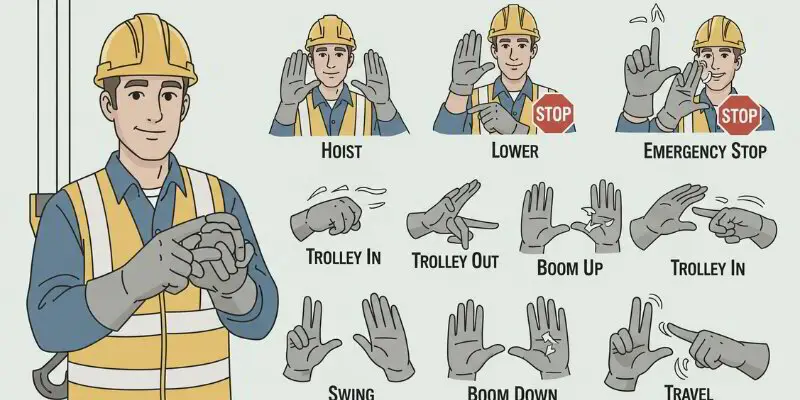
- Two days of classroom instruction on hand and voice signals
- Third day for the practical exam
- Preparation for NCCCO Signalperson written and practical exams
- Training materials and handouts
A Three-Day Path to Certification
The signal person certification class prepares you for the NCCCO Signalperson credential. The first two days are classroom instruction on the skills and responsibilities of a signal person. On the third day you take the practical exam, showing that you can communicate clearly and safely with a crane operator.
What You'll Learn
- The standard hand signal chart and voice signal procedures
- Positioning for clear sight lines to the operator and the load
- Responsibilities before, during and after the lift
- Emergency stop and how to handle lost communication
- What the practical exam asks you to demonstrate
Why Certify?
OSHA allows signal persons to be qualified through an employer evaluation or a third party. An NCCCO certification is a portable credential that travels with you from job to job and is valid for five years. NCCCO issues it; The Crane School prepares you. See the signalperson program page for more.
Who Benefits Most
Riggers, crane crew members, foremen and laborers who regularly direct lifts all make good candidates. Signaling is often handed to whoever is closest to the load, and that person may never have been trained. Certifying the people who signal most often gives your site a consistent standard. Employers with several candidates can ask about on-site delivery. Our post on signalperson certification requirements explains the rules in more depth.
Enrollment Steps
Pick your class date and pay by card in the online box above, or select this class on the enrollment request form and the office will contact you about payment. Either way, staff confirm your seat before class. Bring hard-toe footwear, a hard hat, gloves, work clothes and a government-issued photo ID.