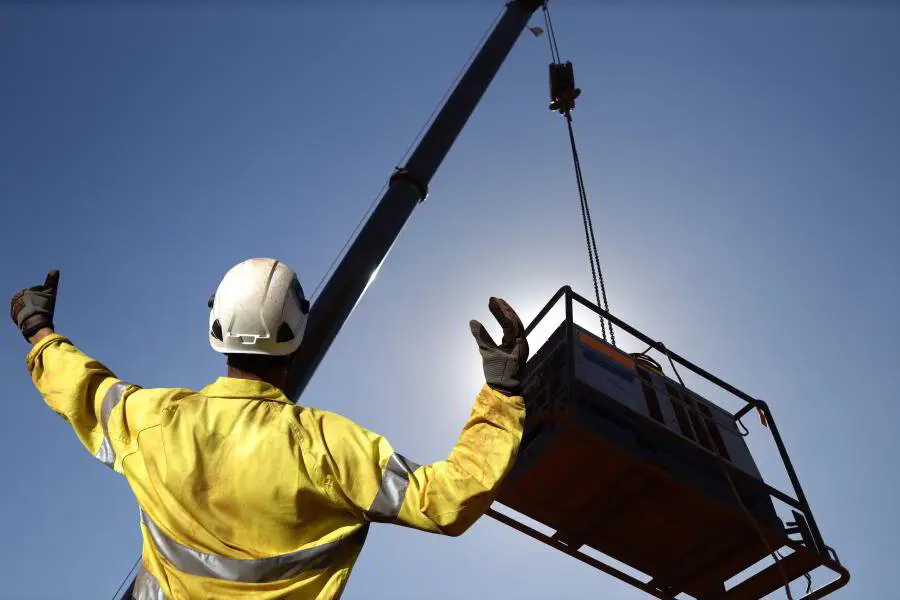
Signalperson Certification Requirements: The Complete Checklist
Two Sets of Requirements
Signalperson certification requirements come from two sources that work together:
- OSHA 29 CFR 1926.1428 sets the minimum that every signal person on a construction crane job must meet.
- NCCCO writes the rules for its own Signalperson credential, a portable third-party certification that meets OSHA's requirement wherever you go.
This checklist covers both, plus what employers are expected to do. Not sure yet whether employer qualification or full certification suits you? Our piece comparing the two signalperson routes is the place to start.
OSHA's Requirements for Every Signal Person
Section 1926.1428 says no one may signal until a qualified evaluator, either a third party or one working for the employer, has qualified them. To be qualified, the person must:
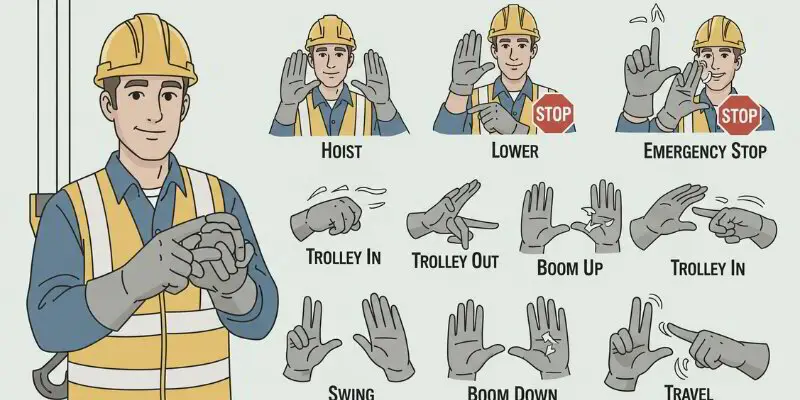
- Understand and be familiar with whatever kind of signals are in use. If hand signals are used, that means the standard method in OSHA's Appendix A.
- Apply those signals competently.
- Grasp the basics of how cranes work and where their limits lie, boom deflection included.
- Understand the OSHA signaling provisions found in 1926.1419 through 1926.1422 and in 1926.1428.
- Prove all of the above by passing a practical test along with either an oral or a written test.
A third-party evaluator's qualification goes with you from job to job. An employer's in-house evaluation, by contrast, is good only with that employer.
NCCCO Signalperson Eligibility
The basic conditions NCCCO sets for candidates are simple. You must:
- Be 18 or older.
- Follow NCCCO's substance abuse policy.
- Accept NCCCO's code of ethics.
- Pass both the Signalperson written exam and the Signalperson practical exam within the window NCCCO allows between them.
There is no formal education requirement, though you need enough reading ability to handle the written exam. Fees and timelines change, so read the latest candidate handbook at nccco.org (opens in a new tab) before you register.
The Two Exams
Written exam
The written exam tests your knowledge of standard signals, signaling procedures, basic crane operation and the regulations that govern signaling. It is a multiple-choice test taken under proctored conditions. Every month, the Seffner, FL headquarters of The Crane School hosts CCO written testing.
Practical exam
For the practical, you guide a crane through a set of tasks with standard hand signals and voice commands. An accredited NCCCO examiner grades the clarity and accuracy of your signals and how smoothly you direct the load.
You must pass both. Pass one exam but not the other, and you only retake the one you missed, provided you are still inside NCCCO's allowed window. For preparation advice, see our signalperson exam tips.
Physical and Practical Abilities
Neither OSHA nor NCCCO lists a detailed medical standard for signalpersons the way some operator programs do, but the job itself has practical demands. You need to:
- See the load, its path and the operator clearly, sometimes at a distance.
- Use both arms for signals such as the emergency stop.
- Speak and hear clearly on a radio for voice signals.
- Stay on your feet and alert through long lifts in heat or bad weather.
If you have a limitation in any of these areas, talk with your employer and your training provider before you register.
Documentation Requirements
OSHA requires that documentation of a signal person's qualification be available at the site while the signal person is assigned to work there. In practice:
- Certified signalpersons carry their NCCCO card or show status in the MyCCO app. Cards typically arrive three to five weeks after passing.
- Employer-qualified signal persons need the employer's written record of the evaluation available on site.
Paperwork kept only at the office doesn't meet the rule.
Keeping Your Certification Current
NCCCO Signalperson certification is valid for five years. Recertify before it expires to avoid starting over as a new candidate. Starting the process sometime during your fifth year is a sensible habit. NCCCO publishes the exact recertification steps, so confirm the current version before you begin.
OSHA also expects ongoing competence. Should an employer notice a signal person falling short, such as by giving wrong signals, that person should be pulled from signaling until retraining and a fresh evaluation are complete.
What Employers Must Do
Employers carry real responsibilities under the crane standard:
- Make sure every signal person is qualified before they signal.
- Keep qualification documentation at the site.
- Assign a signal person whenever the operator cannot fully see the point of operation, whenever the view along the travel path is blocked, or whenever site safety warrants one.
- Have the operator, the signal person and any lift director settle on voice signals before the load moves.
- Take signaling duties away from anyone who demonstrates they no longer meet the requirements, and keep them off until retraining and re-evaluation are done.
For qualifying or certifying a whole crew, training at your own site is frequently the most efficient choice. We can bring these programs to a client's facility in any part of the country.
Common Misunderstandings
A few mix-ups come up again and again:
- "A training certificate makes me certified." A completion certificate from a class is not NCCCO certification. Only NCCCO issues that.
- "My old employer qualified me, so I'm covered." Employer qualification doesn't transfer to a new employer.
- "Operators can't signal." They can, if they meet the signal person requirements when they step out of the cab to signal for another operator.
How to Meet the Requirements
Our Signalperson Qualification and Certification Program can be taken two ways:
- Signal Person Qualification: a two-day, $425 class that supports your employer's qualification process.
- Signal Person Only Certification with Practical: a three-day, $1,375 option that ends with the NCCCO practical on the third day.
Questions about which route fits your site? Call (813) 402-2017 or send us a note.
FAQ
How old must you be for NCCCO Signalperson certification?
You need to be 18 or older, follow NCCCO's substance abuse policy and accept its code of ethics.
Does OSHA require a written test for signal persons?
OSHA calls for a practical test along with either an oral or a written one. For NCCCO certification, that means one written exam and one practical exam.
Where must signal person documentation be kept?
Keep it on the jobsite for as long as the signal person is assigned there.
How long is NCCCO Signalperson certification valid?
Five years, after which you must recertify to keep it active.