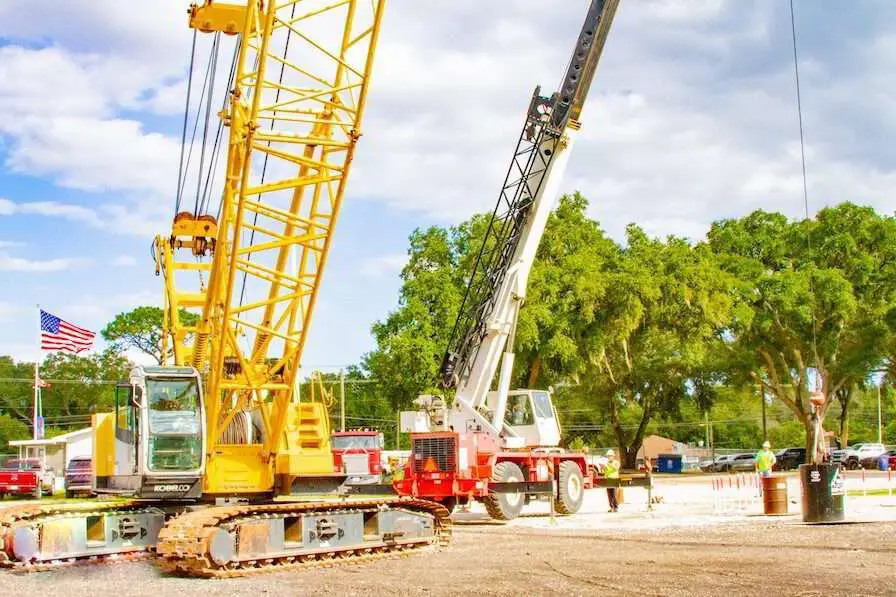
Mobile crane on a hospital construction site in Burlington, Vermont, with Lake Champlain in the distance
Burlington, VT

NCCCO Crane Training for Burlington, Vermont

Campus, hospital and downtown projects on the shores of Lake Champlain need certified crane crews. Here is how Burlington employers and operators can prepare.

Vermont's Largest City on the Lake

Burlington is Vermont's largest city, home to the University of Vermont and the state's main academic medical center. Campus buildings, hospital additions, downtown housing and waterfront redevelopment along Lake Champlain account for much of the local crane work. Many of those projects sit on tight, sloped lots between existing buildings, with the lake a few blocks away.

NCCCO crane training in Burlington, VT needs to prepare operators and ground crews for that setting: limited space, nearby pedestrians and weather that can turn quickly.

Training for a Northern Climate

Vermont winters are long, cold and snowy, and wind across Lake Champlain can be strong. For crane crews, that means frozen ground that thaws unevenly in spring, ice on steps and structures, slower hydraulics on cold mornings and shorter daylight for outdoor work. Mud season adds soft, unpredictable ground.

Planning around those conditions is part of good crane operation. When we deliver on-site training in Burlington, classroom sessions can happen any time of year, while practical exams are easiest to schedule from late spring through early fall. Operators who need a card sooner can travel to our Florida campus instead.

A winter trip south has another advantage: candidates can focus on technique without fighting the cold. Many northern operators use the Florida option for recertification, then return home ready for the spring building season. Our article on crane safety in extreme weather covers cold-weather practices worth reviewing either way.

Credentials for Burlington Job Sites

  • Experienced operators: the mobile crane certification prep program covers NCCCO TSS, TLL and LAT exams and runs once a month in Seffner, Friday to Monday.
  • Signal persons directing blind lifts on hospital and campus jobs: signalperson certification prep.
  • Riggers handling steel, precast and mechanical units: Rigger Level I and II training.
  • Project leaders: the Managing Crane Safety class for planning, inspections and responsibilities.

Operators renewing a card should begin during their final year; NCCCO certifications are valid for five years.

What Vermont Law Requires

Vermont is not among the states commonly cited for a separate crane operator license. OSHA's crane rules govern construction lifting, including operator certification under 1926.1427, and employers may set stricter rules of their own. For more statewide context, see our Vermont crane school overview.

Vermont also runs its own state occupational safety program, and contractors on university or hospital work may face additional owner requirements. Ask for those details early in the bidding process so training can be scheduled in time.

How to Train From Burlington

The Crane School has no Vermont office. Employers with several candidates can host our instructors and NCCCO accredited examiners at their yard or facility. Individuals can fly to Tampa International and attend open-enrollment classes at our Seffner campus, where CCO written exams are offered every month. Contact us to compare options.

When you reach out about on-site training, include the number of candidates, whether they are new or experienced, the cranes available and the space you have for a practical exam course. Hospital and campus contractors working on active sites sometimes prefer to run practical exams at a separate yard to keep the test away from patients, students and traffic.

Frequently Asked Questions

Can we schedule on-site practical exams in a Vermont winter?

Classroom work can run any time, but outdoor practical exams are much easier from late spring to early fall. Winter candidates often travel to our Florida campus.

Does Vermont have its own crane license?

Vermont is not commonly cited for a separate crane operator license. Federal OSHA rules govern, and employers may require more.

How long does NCCCO certification last?

Five years. We recommend starting recertification during your final year so your card does not lapse.

The Crane School

Training Programs & Services

All programs are delivered in compliance with current OSHA regulations.

Mobile Crane Operator Certification Prep Program

For experienced operators ready to certify or recertify. Includes NCCCO TSS, TLL and LAT written and practical exams.

Learn more about Mobile Crane Certification Prep

Initial Mobile Crane Operator Training Program

For people with little or no crane experience. 3-week (TSS/TLL) and 5-week (adds LAT) programs with NCCCO exams.

Learn more about Initial Mobile Crane Training (3 & 5 Week)

Articulating Crane Operator Certification Prep Program

For knuckle-boom operators. Prepares you for the NCCCO ABC, ABL and ABW written and practical exams.

Learn more about Articulating Crane Certification Prep

Rigger Qualification / Certification Program

For personnel who rig loads to cranes — supports your rigger qualification and NCCCO Rigger Level I/II exams.

Learn more about Rigger Level 1 & 2

Signalperson Qualification / Certification Program

Standard hand and voice signals for directing cranes, plus preparation for the NCCCO Signalperson exams.

Learn more about Signalperson

Managing Crane Safety Class

For managers and supervisors: OSHA compliance, lift planning, inspections, certification and liability.

Learn more about Managing Crane Safety

Telehandler Operator Program

Certification or recertification for telehandler operators. Includes the NCCCO THO written and practical exams.

Learn more about Telehandler Operator

Crane Inspection Services

Annual, monthly, post-assembly and post-incident inspections plus load testing by NCCCO-certified inspectors.

Learn more about Crane Inspections

Related Reading

Contact The Crane School

Contact The Crane School by phone, text or email to enroll in NCCCO crane training in Seffner, FL. Office open Mon–Fri, 7 AM–4 PM. Send us your questions today.

Crane Operator Practice Test

Ten quick questions on crane safety rules and NCCCO basics. Pick one answer per question — your score shows on the next page.

1. Which OSHA standard covers cranes and derricks used in construction?
2. How long is an NCCCO crane operator certification valid before recertification?
3. What does NCCCO stand for?
4. Under OSHA's current construction crane rule, operator certification must be obtained by:
5. Under OSHA Table A (1926.1408), what is the minimum clearance from power lines rated up to 50 kV?
6. When is a signal person required?
7. Whose emergency stop signal must a crane operator obey?
8. What does an anti-two-block device prevent?
9. Which document gives a crane's rated capacity for a given boom length and radius?
10. Which NCCCO designation covers telescopic boom cranes with a swing cab?