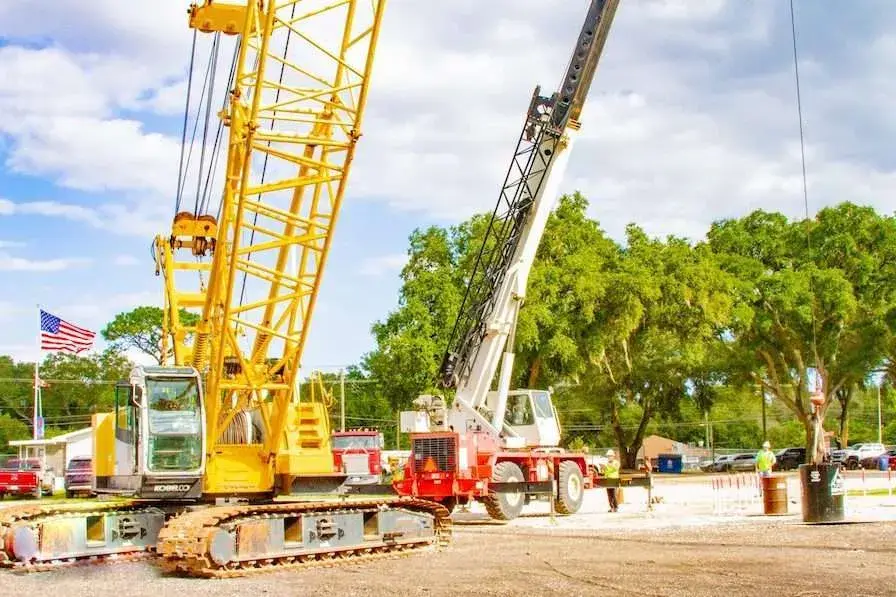
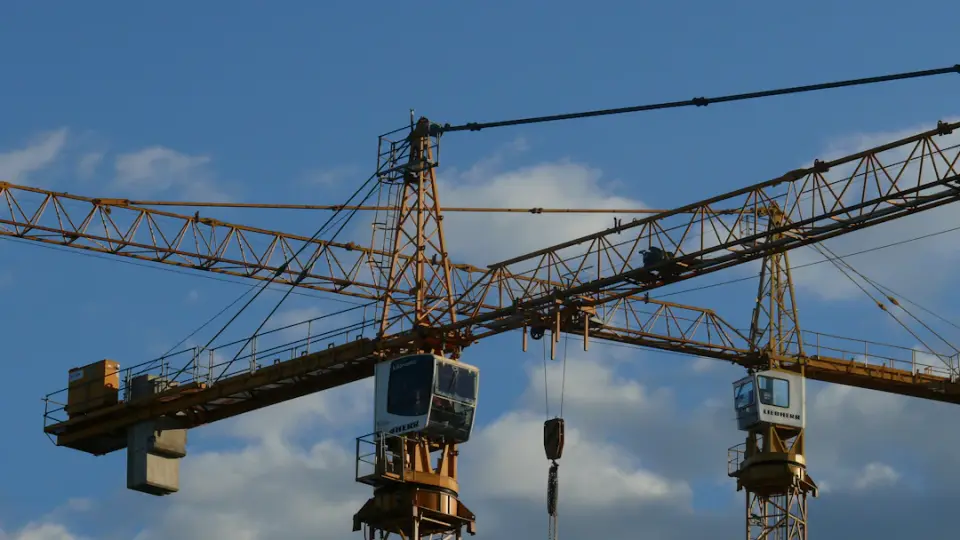
Large mobile crane setting electrical equipment at a construction site on the high plains near Cheyenne, Wyoming
Cheyenne, WY

NCCCO Crane Certification Prep in Cheyenne, Wyoming

Rail, data-center, military and highway construction crews around Cheyenne can prepare for NCCCO exams on-site or at our Florida training center.

Where Rail, Highways and New Construction Meet

Cheyenne grew up as a railroad town, and rail remains a big part of its identity. Interstates 80 and 25 cross here, making the city a freight and distribution point on the edge of the Colorado Front Range. As Wyoming's capital, it also has state government construction, while F.E. Warren Air Force Base brings military facility work. In recent years, large data-center projects have come to the Cheyenne area as well.

Each of those sectors uses cranes differently, so Cheyenne NCCCO crane certification often involves several roles rather than a single operator card.

High Plains Wind and Weather

Cheyenne sits at roughly 6,000 feet on the high plains, and strong wind is part of daily life, especially in winter and spring. Gusts can exceed safe limits with little warning, and blowing snow reduces visibility for both operators and signalpersons. Summer thunderstorms bring lightning and sudden wind shifts.

The practical consequence is that lift plans need clear wind limits and a person responsible for monitoring them. Our instructors teach how to apply manufacturer wind data, how large, flat loads like precast panels and mechanical equipment react, and why the decision to stop should be made before the load leaves the ground.

Thin air at altitude also makes long days more tiring, and fatigue is a quiet contributor to mistakes. Our instructors encourage crews to build realistic schedules, plan breaks during high-wind holds, and treat the end of a shift with the same care as the start. Spring is often the windiest season here, so on-site practical exams are usually easiest to schedule in summer or early fall.

Programs for Cheyenne Job Sites

Data-center and commercial projects tend to involve large mobile cranes setting heavy equipment, plus telehandlers and boom trucks handling material. Common choices include:

  • The mobile crane certification prep program for experienced operators preparing for TSS, TLL and LAT exams.
  • Signalperson certification for crews directing blind picks around buildings and equipment yards.
  • Rigger Level I and II for crews rigging generators, transformers and steel.
  • The Managing Crane Safety class for supervisors overseeing multi-crane sites.

Our OSHA rigging and signaling article is a helpful primer for ground crews.

Wyoming Requirements

Wyoming does not have its own crane operator license, so federal OSHA rules govern, and employers or project owners may set stricter rules. Crews who cross into Colorado for work should check the rules that apply there as well. Our Wyoming crane training overview has more about statewide service.

On-Site Delivery or Florida Classes

The Crane School is based in Seffner, Florida, and we do not have a Cheyenne office. For groups with suitable equipment, our instructors and accredited practical examiners come to your site. Individuals can attend open-enrollment classes in Seffner; many Cheyenne travelers fly out of Denver to Tampa International. The monthly mobile crane prep class runs Friday through Monday, and CCO written exams are held every month at our headquarters. Call or send us a message to compare options. Let us know the crane types on your sites, the number of people who need certification or renewal, and whether you have a yard in Laramie County with room for a test course, and we will outline a practical plan.

Frequently Asked Questions

Can Cheyenne operators prepare for the LAT exam?

Yes. The mobile crane prep program covers TSS, TLL and LAT exams, and the five-week initial program includes lattice boom training for new operators.

Do signalpersons on Cheyenne job sites need certification?

OSHA requires signalpersons to be qualified when signals are needed. Many employers use NCCCO Signalperson certification to document that qualification.

How far in advance should we book on-site training?

As early as you can, especially for spring or summer dates. Instructor and examiner availability and weather both affect scheduling.

The Crane School

Training Programs & Services

All programs are delivered in compliance with current OSHA regulations.

Mobile Crane Operator Certification Prep Program

For experienced operators ready to certify or recertify. Includes NCCCO TSS, TLL and LAT written and practical exams.

Learn more about Mobile Crane Certification Prep

Initial Mobile Crane Operator Training Program

For people with little or no crane experience. 3-week (TSS/TLL) and 5-week (adds LAT) programs with NCCCO exams.

Learn more about Initial Mobile Crane Training (3 & 5 Week)

Articulating Crane Operator Certification Prep Program

For knuckle-boom operators. Prepares you for the NCCCO ABC, ABL and ABW written and practical exams.

Learn more about Articulating Crane Certification Prep

Rigger Qualification / Certification Program

For personnel who rig loads to cranes — supports your rigger qualification and NCCCO Rigger Level I/II exams.

Learn more about Rigger Level 1 & 2

Signalperson Qualification / Certification Program

Standard hand and voice signals for directing cranes, plus preparation for the NCCCO Signalperson exams.

Learn more about Signalperson

Managing Crane Safety Class

For managers and supervisors: OSHA compliance, lift planning, inspections, certification and liability.

Learn more about Managing Crane Safety

Telehandler Operator Program

Certification or recertification for telehandler operators. Includes the NCCCO THO written and practical exams.

Learn more about Telehandler Operator

Crane Inspection Services

Annual, monthly, post-assembly and post-incident inspections plus load testing by NCCCO-certified inspectors.

Learn more about Crane Inspections

Related Reading

Crane Operator Practice Test

Ten quick questions on crane safety rules and NCCCO basics. Pick one answer per question — your score shows on the next page.

1. Which OSHA standard covers cranes and derricks used in construction?
2. How long is an NCCCO crane operator certification valid before recertification?
3. What does NCCCO stand for?
4. Under OSHA's current construction crane rule, operator certification must be obtained by:
5. Under OSHA Table A (1926.1408), what is the minimum clearance from power lines rated up to 50 kV?
6. When is a signal person required?
7. Whose emergency stop signal must a crane operator obey?
8. What does an anti-two-block device prevent?
9. Which document gives a crane's rated capacity for a given boom length and radius?
10. Which NCCCO designation covers telescopic boom cranes with a swing cab?