Rigger Training Near Me: How to Find a Program Worth Your Time

What a Search for Rigger Training Near Me Should Turn Up
When you type rigger training near me into a search bar, you get a mix of safety consultants, union halls, equipment dealers and crane schools. Distance is the first thing most people filter on, but it should not be the last.
A useful result is a class that matches the credential you need. Some workers need an employer-recognized qualification so they can hook loads on Monday. Others need an NCCCO Rigger Level I or Level II certification because a contractor or project owner requires it.
Before you compare drive times, decide which of those two outcomes you are after. That one decision narrows the list quickly.
Three Ways to Get Trained Without a Long Commute
"Near me" does not have to mean a training center in your town. There are three practical ways to get rigging instruction close to where you work.
1. Open-enrollment classes at a training center
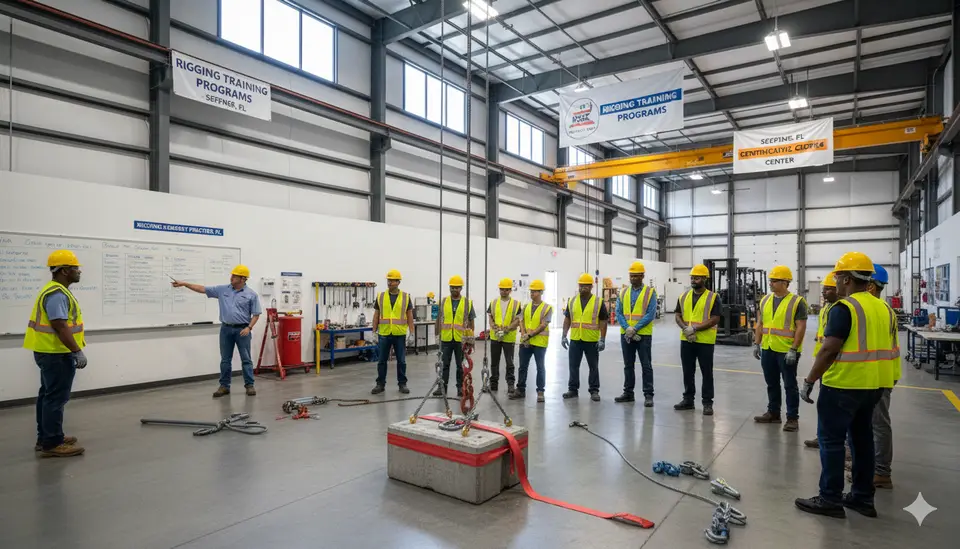
The Crane School runs scheduled rigging classes at its training center in Seffner, Florida, just east of Tampa. If you live in the Tampa Bay area, that is a short drive. If you are farther away, Tampa International Airport is the closest major airport and the school has a negotiated lodging rate nearby.
2. On-site training at your facility
Employers with a crew to train can bring the class to them. The Crane School delivers scheduled programs at client facilities anywhere in the country, so your riggers practice with the slings, hardware and loads they actually handle.
3. Practical exams scheduled where you are
NCCCO practical exams must be given by an accredited practical examiner. The Crane School's staff includes accredited examiners for rigging and signalperson exams, and practical exams can be scheduled nationwide.
Qualification Class or Full Certification?
Most rigging programs fall into two buckets. Knowing the difference keeps you from paying for more, or less, than you need.
- Rigger qualification supports an employer's process for designating qualified riggers under OSHA's crane standard. At The Crane School this is the 2-Day Rigger Qualification Class, listed at $425.
- NCCCO rigger certification is a third-party credential that requires passing a written exam and a practical exam. The Rigger Only Certification with Practical is a three-day format: two days of training, then practical exams on day three. It is listed at $1,375.
If you already hold a certification and it is nearing its five-year expiration, a recertification class is the right fit instead. Full details on both levels are on the Rigger Qualification and Certification Program page.
Questions to Ask Any Rigging School Before You Enroll
A short phone call tells you more than a polished website. Ask each program you are considering:
- Who teaches the class? Look for instructors who hold NCCCO rigger certifications and have real field time, not just classroom credentials.
- How much hands-on time is there? You should handle slings, shackles and hardware, inspect real gear and rig actual loads.
- Which exams are included? Confirm whether written exams, practical exams or both are part of the price.
- What topics are covered? At minimum: sling and hardware inspection, hitch types and capacities, estimating load weight, finding the center of gravity, sling angles and basic hand signals.
- What happens if I don't pass? Find out the retest process before you pay.
- What should I bring? Expect hard-toe boots, a hard hat, gloves, work clothes and government-issued photo ID.
Warning Signs When Comparing Local Options
Some offers look convenient but leave you short when a site safety manager checks your paperwork.
Be cautious of courses that are entirely online with no practical component when you need certification, since NCCCO certification requires a hands-on practical exam. Be equally careful with any provider that claims to issue NCCCO cards itself. NCCCO is an independent certifying body; training schools prepare you, and NCCCO issues the certification.
Vague pricing is another flag. A reputable school can tell you exactly what a class costs and what it includes. Finally, a "certificate of completion" is not the same as a certification. It may still be useful for employer qualification, but know which one you are buying.
Matching the Program to Your Role
Different people searching for local rigging classes have different goals.
New to construction? Start with a qualification class to learn sling selection, inspection and safe hitches, then move to certification once you have field experience.
Ironworker, millwright or equipment operator? You likely rig loads already. A certification class can turn that experience into a portable credential that travels with you between employers.
Safety manager or superintendent? On-site training lets you qualify a whole crew at once and document it. Pairing rigging with signaling is common, since the same people often do both. Our article on rigger and signalperson training explains how the two fit together.
If you want a deeper checklist for weighing schools side by side, see how to compare rigging training programs.
What a Good Rigging Class Day Looks Like
Classroom time should be short and practical. Expect to cover OSHA's crane and rigging rules, the job duties NCCCO expects of a Level I or Level II rigger, and the math behind a safe pick: estimating load weight, locating the center of gravity and figuring how sling angle changes the tension in each leg.
Then you should be outside with gear in your hands. A solid class has you inspect slings and hardware and pull damaged pieces from service, choose between vertical, choker and basket hitches, and rig loads with awkward shapes or off-center balance points.
Finally, expect practice that mirrors the exam. Practical exams are timed and scored, so rehearsing the tasks under realistic conditions removes a lot of test-day nerves.
Next Step
Tell us where you are and what credential you need, and we will tell you whether a Seffner class, an on-site session or a scheduled practical exam makes the most sense. Contact The Crane School or call (813) 402-2017.
FAQ
Is online rigger training enough to get certified?
No. NCCCO rigger certification requires passing a practical exam in addition to the written exam, so you need hands-on preparation and an in-person practical.
Can The Crane School train my crew at our facility?
Yes. Scheduled programs, including rigging, can be delivered on-site at a client's facility anywhere in the country.
How long is a rigger class?
The Crane School's rigger qualification class runs two days. The certification format runs three days, with practical exams on the third day.
Do I need experience before a rigger qualification class?
No prior certification is needed for the qualification class. Field experience helps a lot before you attempt NCCCO certification exams, especially Level II.