How to Compare Rigging Training Programs in the Seffner and Tampa Bay Area
Why a Scorecard Beats a Ranking
Online "top program" lists rarely explain their criteria, and some are written by the schools themselves. A better way to compare rigging training programs is to score each one against the same set of questions and see which fits your goal.
This guide gives you that scorecard. We use The Crane School's Seffner programs as a worked example because we can describe them accurately, but the same questions apply to any provider you are considering in Tampa Bay or elsewhere.
Step 1: Define the Outcome You Need
Before you compare anything, write down the credential you need:
- Employer qualification so you can rig on your current job.
- NCCCO Rigger Level I certification for basic, repetitive rigging where weights and centers of gravity are known.
- NCCCO Rigger Level II certification for estimating weights and centers of gravity and handling more complex rigging.
- Recertification of an existing NCCCO certification.
The Rigger Qualification and Certification Program page explains how these levels differ at The Crane School.
Programs that look similar can be aimed at completely different outcomes. A cheaper qualification class is no bargain if your contractor requires NCCCO certification.
Step 2: Score the Instruction
Give each program a score from 1 to 5 on these points:
Instructor credentials
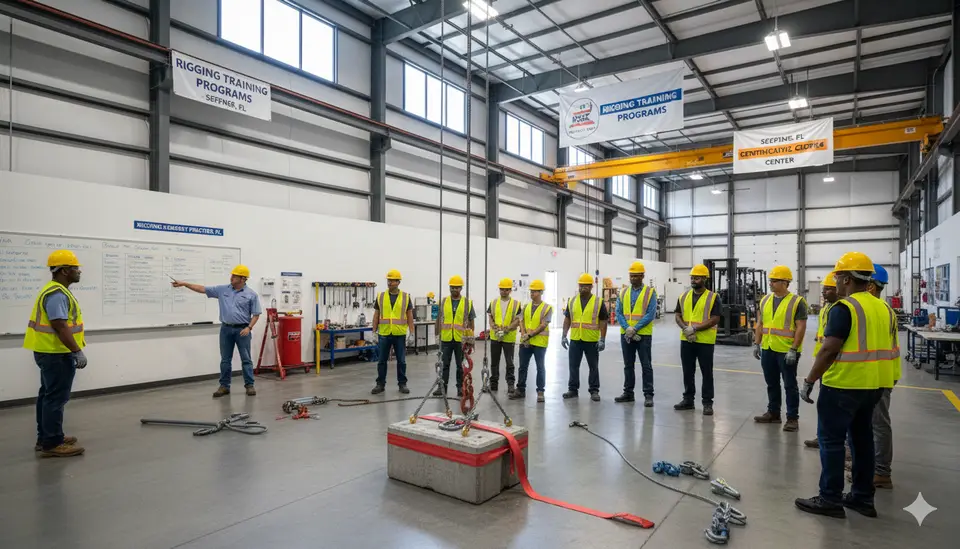
Do instructors hold NCCCO rigger certifications? Do they have field experience as riggers and operators? At The Crane School, instructors include NCCCO Certified Riggers, Certified Signalpersons and Certified Crane Operators.
Hands-on time
How much of the class is spent handling slings, hardware and loads? Ask for an hour count, not just "hands-on included."
Curriculum coverage
Look for sling and hardware inspection, hitch types and capacities, load weight estimation, center of gravity, sling angle calculations, OSHA rules and basic signals.
Class size
Smaller groups mean more turns rigging loads. Ask how many students a typical class holds.
Step 3: Score the Exam Path
For certification seekers, exam logistics often matter as much as the class.
- Written exam access: How often are NCCCO written exams offered nearby? The Crane School offers CCO written exams monthly in Seffner.
- Practical exam access: Does the provider have NCCCO accredited practical examiners? Programs with examiners on staff can build the practical into the class schedule.
- Timing: NCCCO generally requires you to pass the written and practical within a set window of each other. A program that schedules both close together reduces the risk of a lapse.
- Retest policy: Ask what happens and what it costs if you miss one part.
Step 4: Score Price and Value
Get prices in writing and confirm exactly what is included. For reference, The Crane School's published prices are:
- 2-Day Rigger Qualification Class: $425
- Rigger Only Certification with Practical (3 days, practical exams on day three): $1,375
- 2-Day Rigger Recertification Class: $425
When comparing, weigh the total cost: tuition, any separate exam fees, travel, lodging and time away from work. A slightly more expensive class that includes the practical exam can cost less overall than a cheaper one that sends you elsewhere to test.
Step 5: Score Scheduling and Logistics
- Dates: Are classes offered often enough to fit your work schedule?
- Location: Seffner sits just east of Tampa on US-92, with Tampa International Airport the nearest major airport.
- Lodging: Does the school have a hotel arrangement? The Crane School has a negotiated rate at the Holiday Inn Express Tampa Fairgrounds.
- On-site option: Employers training a crew should ask whether the program can be delivered at their facility. The Crane School delivers on-site anywhere in the country.
A Simple Scorecard Template
Copy this list and fill in a score from 1 to 5 for each program:
- Matches the credential I need
- Instructor certifications and field experience
- Hours of hands-on practice
- Curriculum completeness
- Written exam access
- Practical exam access
- Total cost, all-in
- Schedule fit
- Location and lodging
- Clear answers to my questions
The highest total isn't automatically the winner. A program that scores low on item 1 should be ruled out no matter how it does elsewhere.
Worked Example: Two Different Students
The same scorecard can point two people to different classes.
A new hire at a Tampa contractor
Her employer needs her rigging loads within the month and has its own qualification process. She doesn't need NCCCO certification yet. Item 1 on the scorecard points her to a two-day qualification class, and the deciding factors are schedule fit and hands-on time. Once she has field experience, she can return for certification.
A traveling ironworker
He moves between projects in several states and keeps getting asked for an NCCCO rigger card. Portability is everything for him, so item 1 rules out qualification-only classes. Exam access weighs heavily: a program that pairs instruction with a practical exam day and offers monthly written exams lets him finish in one trip.
Neither student needs the "best" program. Each needs the one that fits.
Red Flags to Watch For
- A provider claiming it issues NCCCO certifications. Only NCCCO does that.
- Online-only courses marketed as full rigger certification. NCCCO certification requires an in-person practical.
- Pass-rate claims with no explanation of how they were counted.
- Prices that change once you ask what is included.
Next Steps
For a closer look at the Seffner classes themselves, see rigging training in Seffner, FL. If you are still deciding between local and on-site options, read finding rigger training near you. Ready to ask your scorecard questions? Contact The Crane School or call (813) 402-2017.
FAQ
What is the most important factor when comparing rigging programs?
Whether the program leads to the credential you actually need. Instructor quality, hands-on time and exam access come next.
Are cheaper rigging classes worth it?
Sometimes. Compare the total cost, including exam fees, travel and retests, and confirm the class meets your employer's or project's requirement.
Does NCCCO accredit rigging schools?
NCCCO certifies individuals and accredits practical examiners; it does not train. Ask whether a school's staff includes NCCCO accredited practical examiners.