Top Safety Training Programs for Experienced Crane Operators and Supervisors
Experience Brings New Risks
Seasoned operators rarely make beginner mistakes. Their risks look different: complacency on routine lifts, unfamiliar new equipment, more complex lift assignments and the pressure that comes with supervising others. Crane safety refresher training is designed for exactly those situations.
This post covers training for certified operators, lift directors and site supervisors. If you are new to cranes, start with our companion guide to safety training programs for new crane operators.
Fighting Complacency on Routine Lifts
Complacency is one of the biggest risks for experienced operators. After hundreds of similar picks, it is easy to skip the test lift a few inches off the ground, guess at a rigging weight or let the walk-around inspection become a quick glance. Nothing goes wrong, so the shortcut becomes the habit, until the day conditions are different.
Refresher training helps by forcing a reset. Good sessions:
- Revisit the reasons behind each step, not just the steps
- Use real incident examples to show how small shortcuts add up
- Ask operators to compare their current habits with the standard
- Encourage honest discussion of near-misses without blame
The goal is not to suggest that experienced operators are careless. It is to give them a regular chance to step back and check their own routines with fresh eyes.
Recertification Prep for Certified Operators
CCO certifications are valid for five years, and NCCCO recommends enrolling in the last year before expiration. Recertification is an opportunity to close gaps that may have opened since your first exams, especially in load chart calculations and regulations.
The Crane School's mobile crane certification prep program serves operators who are recertifying as well as those certifying for the first time. It runs once a month, Friday to Monday: practical exams Friday, classroom Saturday and Sunday, and written exams Monday morning. A classroom-only recertification prep class is also available.
Advanced Topics Worth Revisiting
Complex and critical lifts
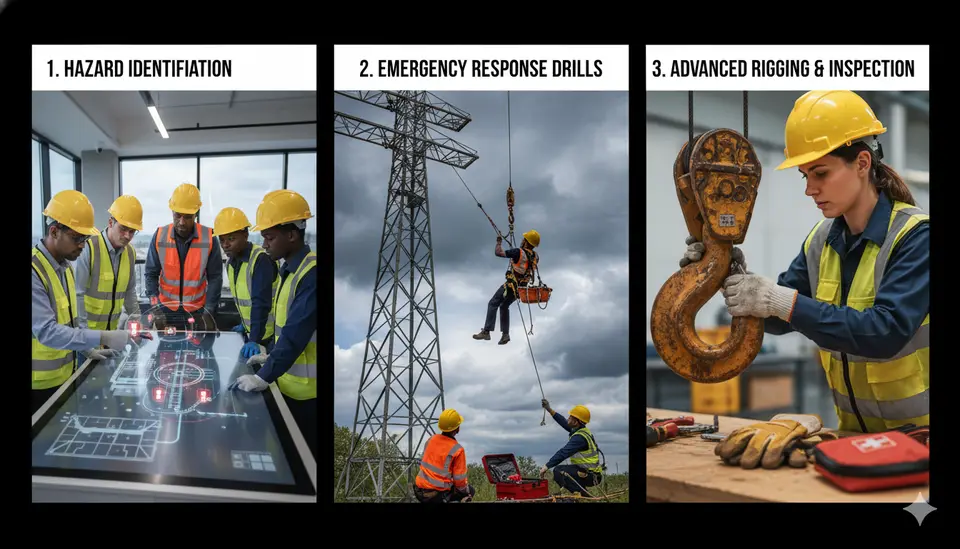
Tandem lifts, blind picks, lifts over occupied areas and lifts near capacity demand careful planning and coordination. Refresher training should walk through real scenarios and lift plans.
Power line safety
OSHA 1926.1408 procedures, encroachment prevention measures and emergency response deserve regular review because the consequences of error are so severe.
New equipment and operator aids
Updated load moment indicators, range limiters, cameras and telematics are only useful if operators understand them. Our post on crane safety devices summarizes the main systems.
Rigging for operators
Even experienced operators benefit from refreshing sling angle math, hardware inspection and center-of-gravity principles. Our rigger qualification program covers Level I and Level II rigging.
Emergency response
Run through failures, sudden weather and power line contact so the right actions stay automatic.
Training for Supervisors and Lift Planners
Supervisors carry responsibility for planning, staffing and enforcing safe practices. They need a different kind of training than operators. Key topics include:
- OSHA and industry compliance requirements
- Preventing accidents through planning and hazard assessment
- Roles and responsibilities on the lifting team
- Inspection programs and documentation
- Verifying operator certification and qualification
- Limiting liability
The Managing Crane Safety Class is built for management personnel and covers these subjects directly.
Online vs. In-Person Refresher Training
Where online works
- Regulatory updates and policy reviews
- Load chart practice problems
- Short refreshers on signals or inspection criteria
- Preparation before an in-person session
Where in-person matters
- Practical skills, such as load control and setup
- Practical exam preparation on real cranes
- Team drills involving operators, riggers and signalpersons
- Discussions where experienced people share lessons learned
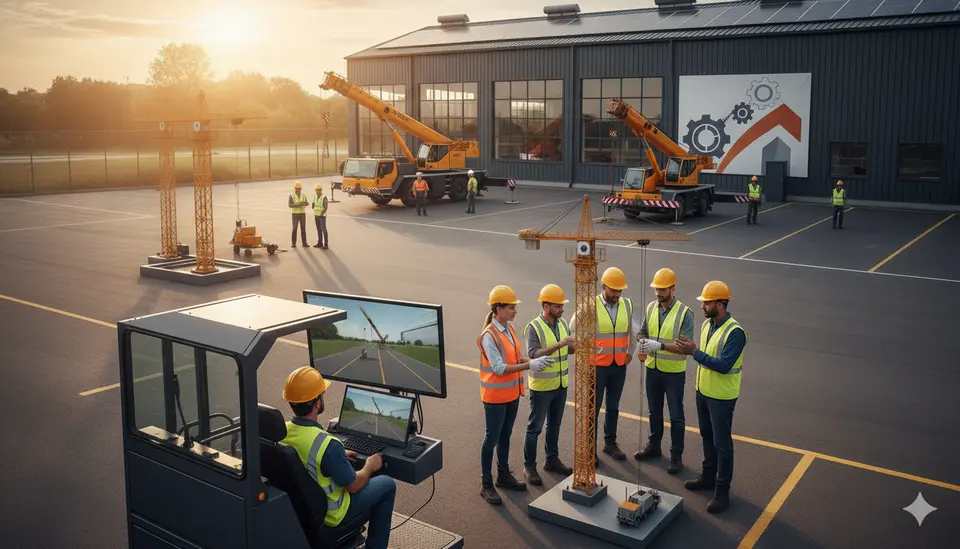
For experienced operators, a blend usually works best: online study to refresh knowledge, then in-person time to sharpen skills and practice as a crew.
How Often Should Experienced Operators Train?
There is no single federal interval for construction refresher training, but sensible triggers include:
- Before each five-year recertification
- When moving to new equipment or configurations
- Before unusual or high-risk lifts
- After an incident or near-miss
- At least once a year as a general refresher, as many employers require
Your employer's policies, client requirements and any state or local rules may set additional requirements.
Passing Knowledge to the Next Generation
Experienced operators are often the best teachers a new hand will ever have. Advanced training can include coaching skills: how to explain a load chart clearly, how to give feedback during a lift without distracting the operator, and how to let a trainee make safe mistakes in a controlled setting.
Mentoring benefits the mentor too. Explaining why a procedure exists is one of the most effective ways to sharpen your own understanding, and it builds the crew culture that keeps everyone safer.
Choosing an Advanced Training Provider
Look for:
- Instructors with extensive operating experience and current NCCCO credentials
- Scenario-based content drawn from real job sites
- Access to the crane types you operate
- Options to train on site with your own crew
- Clear documentation for your training records
Experienced operators can tell quickly whether an instructor knows the work. Ask who will teach and what they have done. Also ask whether the course can be tailored to the lifts your crew actually performs, such as steel erection, precast placement or plant maintenance, so the time spent away from production pays off directly on your next job.
Keep Your Edge
The best operators and supervisors keep learning long after their first certification. Contact The Crane School to plan recertification, advanced or supervisor training, or check the class schedule for upcoming dates.
FAQ
How often should experienced crane operators take refresher training?
Many employers require at least annual refreshers, plus training before recertification, when equipment changes, before unusual lifts and after incidents.
When should I start preparing for CCO recertification?
NCCCO recommends enrolling in the last year before your certification expires. Start reviewing load charts and regulations several months before your exam date.
What training do crane supervisors need?
Supervisors benefit from training on OSHA compliance, lift planning, hazard assessment, inspection programs, verifying qualifications and limiting liability.