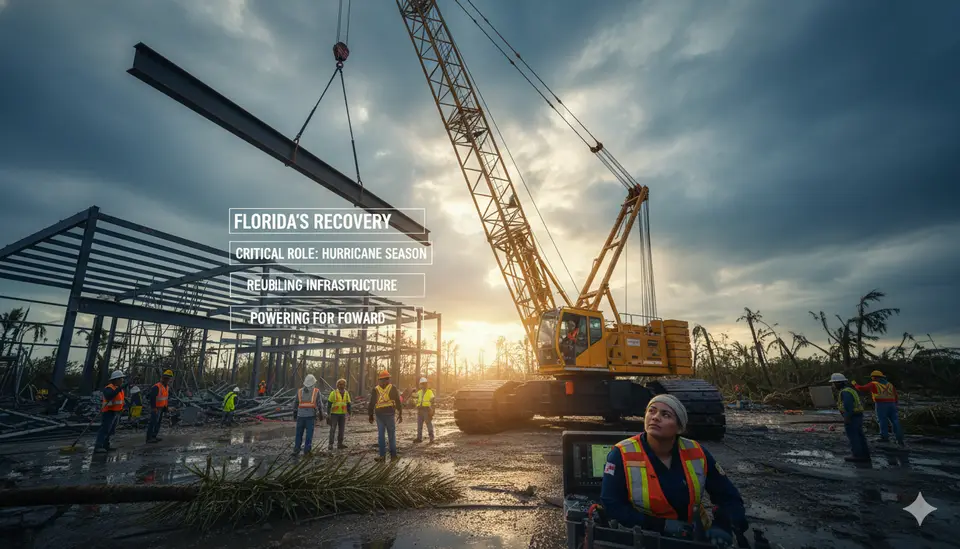

Cranes working on high-rise construction along the Miami waterfront
Miami-Dade & South Florida

Crane Operator Certification for Miami and South Florida

Drive up to our Seffner training center for open-enrollment NCCCO classes, or have our instructors come to your South Florida jobsite.

High-rise building, a busy port and the need for certified operators

Miami's skyline has been growing for years, and the lifting work behind it is some of the most demanding in the state: tower cranes over Brickell and downtown, mobile cranes supporting condo and hotel construction along the coast, and cargo moving through PortMiami. Every one of those jobs depends on operators, riggers and signalpersons who know what they are doing. Crane operator certification in Miami is the baseline for that work.

The Crane School is based in Seffner, Florida, east of Tampa, and has no Miami office. South Florida operators either drive up for our open-enrollment classes or have us come to them.

Crane operator certification for Miami: driving up to Seffner

Because Seffner is in Florida, getting there from Miami is a realistic drive rather than a flight. Most people take Florida's Turnpike or I-75 toward Tampa; the trip takes several hours, so leave plenty of margin the day before class. Students in longer programs usually stay near the training center during the week. We have a negotiated rate at the Holiday Inn Express Tampa Fairgrounds; details are on our hotels page.

The 3-week and 5-week initial mobile crane operator training meets Monday through Thursday, which leaves a long weekend to drive home. Experienced operators can attend the monthly Friday-to-Monday certification prep instead and be back on a Miami jobsite by Tuesday.

Hurricane country changes the lift plan

Hurricane season runs from June through November, and South Florida crews know the drill: secure or lower equipment as a storm approaches, then return to a site where ground, structures and power lines may all have changed. Even outside a named storm, sea breezes and afternoon thunderstorms produce gusts and lightning that can stop a lift in minutes.

Our instructors teach operators to use the manufacturer's wind limits and load charts, account for the large sail area of panels and glass, and recognize when lightning or wind should stop the job. Heat matters too; long days in a hot cab call for water, shade and honest attention to fatigue. Read crane safety tips for extreme weather for a deeper look.

On-site options for Miami-Dade contractors

Contractors with several operators due for certification may prefer that we travel south. We can teach at your yard, and our NCCCO Accredited Practical Examiners can run practical exams on your cranes. Rigger and signalperson training fit naturally into the same visit; on crowded urban sites, our signalperson qualification program helps keep communication standard across trades.

On-site training also lets us talk about the conditions your crews actually face: limited laydown space, lifts over occupied streets, salt air that wears on wire rope and hooks, and lift windows that shift with traffic restrictions. Planning a visit is simple. Send us your headcount, the cranes you run and the dates you have in mind, and we will propose a schedule.

Rules for Florida crane work

Florida does not appear on the commonly cited list of states with their own crane operator licensing, so federal OSHA standards govern construction crane work, including operator certification under 1926.1427. Owners, contractors and local authorities may impose additional requirements, especially on high-rise sites, so confirm them before mobilizing. Our Florida crane training page and our contact team can help you sort out next steps.

Frequently Asked Questions

How long is the drive from Miami to The Crane School?

It is a several-hour drive to Seffner, usually via Florida's Turnpike or I-75. Many students drive up before class and stay nearby during the week.

Do you train tower crane operators in Miami?

Our published operator programs focus on mobile, articulating and telehandler certifications, plus rigger and signalperson training. Call us to discuss your specific crane types.

Can we schedule training around hurricane season?

Yes. On-site dates are set with you, and many contractors plan training to avoid peak storm months or to prepare crews before the season starts.

The Crane School

Training Programs & Services

All programs are delivered in compliance with current OSHA regulations.

Mobile Crane Operator Certification Prep Program

For experienced operators ready to certify or recertify. Includes NCCCO TSS, TLL and LAT written and practical exams.

Learn more about Mobile Crane Certification Prep

Initial Mobile Crane Operator Training Program

For people with little or no crane experience. 3-week (TSS/TLL) and 5-week (adds LAT) programs with NCCCO exams.

Learn more about Initial Mobile Crane Training (3 & 5 Week)

Articulating Crane Operator Certification Prep Program

For knuckle-boom operators. Prepares you for the NCCCO ABC, ABL and ABW written and practical exams.

Learn more about Articulating Crane Certification Prep

Rigger Qualification / Certification Program

For personnel who rig loads to cranes — supports your rigger qualification and NCCCO Rigger Level I/II exams.

Learn more about Rigger Level 1 & 2

Signalperson Qualification / Certification Program

Standard hand and voice signals for directing cranes, plus preparation for the NCCCO Signalperson exams.

Learn more about Signalperson

Managing Crane Safety Class

For managers and supervisors: OSHA compliance, lift planning, inspections, certification and liability.

Learn more about Managing Crane Safety

Telehandler Operator Program

Certification or recertification for telehandler operators. Includes the NCCCO THO written and practical exams.

Learn more about Telehandler Operator

Crane Inspection Services

Annual, monthly, post-assembly and post-incident inspections plus load testing by NCCCO-certified inspectors.

Learn more about Crane Inspections

Related Reading

Crane Operator Practice Test

Ten quick questions on crane safety rules and NCCCO basics. Pick one answer per question — your score shows on the next page.

1. Which OSHA standard covers cranes and derricks used in construction?
2. How long is an NCCCO crane operator certification valid before recertification?
3. What does NCCCO stand for?
4. Under OSHA's current construction crane rule, operator certification must be obtained by:
5. Under OSHA Table A (1926.1408), what is the minimum clearance from power lines rated up to 50 kV?
6. When is a signal person required?
7. Whose emergency stop signal must a crane operator obey?
8. What does an anti-two-block device prevent?
9. Which document gives a crane's rated capacity for a given boom length and radius?
10. Which NCCCO designation covers telescopic boom cranes with a swing cab?