Farm country meets fast growth
Nampa is the largest city in Canyon County and one of the busiest parts of the Treasure Valley's western side. Agriculture and food processing have long been central here, and in recent years new subdivisions, warehouses and commercial centers have spread along I-84. That mix means the lifting work is varied: setting equipment in processing plants, placing trusses and panels on new homes, and erecting steel on distribution buildings.
The Crane School offers NCCCO crane training for Nampa employers at their own facilities. There is no Crane School office in Idaho; we train from Seffner, Florida, and our instructors and practical examiners travel to you.
Telehandlers and knuckle booms do much of the lifting
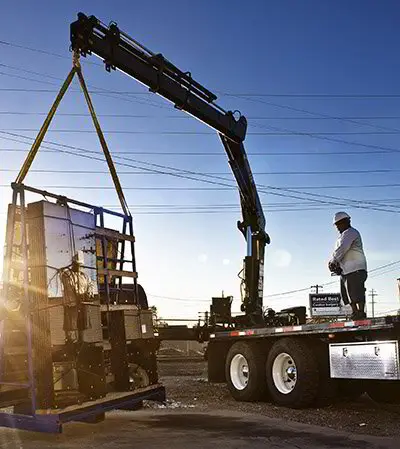
On many Canyon County jobs, the machine doing the lifting is not a traditional crane. Residential builders and ag operations use telehandlers to set loads, and lumberyards, roofing suppliers and equipment dealers rely on knuckle-boom trucks. When those machines lift suspended loads, crane rules and owner requirements can come into play.
- Our telehandler operator program prepares operators for the NCCCO THO written and practical exams.
- Our articulating crane certification prep covers the ABC, ABL and ABW exams for knuckle-boom operators.
- Experienced hydraulic crane operators can prepare for TSS and TLL exams in the same visit.
Our post on telehandler safety training gives more background.
Lifting in and around processing plants
Food-processing and agricultural facilities bring tight interior spaces, conveyors and piping, sanitation rules and production schedules that leave narrow windows for maintenance lifts. Outdoors, storage buildings and grain or produce handling equipment often sit on compacted gravel or soil that softens with irrigation runoff or spring rain.
Our instructors help operators read these sites: checking ground beneath outriggers, planning around overhead obstructions, and coordinating with plant staff. Qualified riggers and signalpersons make these lifts smoother, and their training can be included in your session.
The Treasure Valley's hot, dry summers and cold, sometimes icy winters both matter on these jobs. Dust coats equipment and reduces visibility during harvest, and winter frost can stiffen hydraulics and make steps slick. Good pre-use inspections and an unhurried setup go a long way in either season.
Idaho requirements
Idaho is not one of the states commonly cited for separate crane operator licensing. Federal OSHA rules govern construction crane operators, and employers or owners may set stricter standards. Our Idaho crane school page covers training across the state.
Keep in mind that certification is only one piece. OSHA also expects employers to make sure operators are evaluated on the equipment they will actually run, and many companies document that evaluation separately. Our instructors can explain how certification, evaluation and ongoing training fit together for a small or growing crew.
Scheduling NCCCO crane training in Nampa around your season
Agricultural and construction calendars both have crunch times. Many Nampa employers book training in winter, when field work slows and building projects are easier to pause. Tell us your fleet, headcount and the dates that work, and we will build a plan that keeps production moving. Individuals can also fly from Boise to Tampa for open-enrollment classes in Seffner. Check the class schedule or contact us.