
No State License, One Federal Standard
With no state license and no state-run OSHA plan, Idaho's private employers answer directly to federal OSHA. That leaves 29 CFR 1926 Subpart CC as the governing rule for cranes in construction. Two things are needed under section 1926.1427: an accredited certification matching the crane type, and an employer evaluation on that specific machine before work starts.
For Idaho crane operator certification, then, the job is to pass accredited exams, most commonly NCCCO's CCO written and practical tests. We prepare candidates; NCCCO certifies them. Without a state layer on top, Idaho employers mostly look at two things — your NCCCO card and their own evaluation of you.
Farms, Forests, Dams and a Growing Treasure Valley
Idaho's lifting work reflects its economy. Farming and food processing dominate much of southern Idaho, and their plants and storage buildings bring in cranes whenever something is built or a piece of equipment is swapped. Timber and sawmills in the north run heavy maintenance lifts. Utility crews stay occupied with the Snake River's hydroelectric dams and the power lines running out from them.
The Boise area and the wider Treasure Valley have seen substantial residential and commercial growth, which brings mobile cranes and telehandlers to job sites. In eastern Idaho, the Idaho National Laboratory near Idaho Falls is a major research employer with its own construction and maintenance needs.
Weather and Terrain in the Gem State
Idaho crews work across high desert, river canyons and mountains. Across much of Idaho, winter means snow and cold, and getting heavy machines over mountain roads to a remote site is no small task. Spring thaw softens ground that seemed firm in January, which affects outrigger support and crane mats.
These conditions do not change the NCCCO exams, but they do change how a good operator works. Ground assessment, cold-weather inspection and wind awareness on open plains are worth practicing in the setting where your crew will use them. Our article on crane safety guidelines for operators covers many of the basics.
Bringing Training to Idaho, or Traveling to Seffner
Seffner, Florida — home to our one campus — is a long trip from Idaho, which is why on-site training is the usual pick there. We come to the mill, plant or yard, teach on the cranes you own, and have our NCCCO Accredited Practical Examiners give the practicals before we leave. Operators, riggers and signalpersons can all be covered during that one visit.
If you would rather join an open class, book a flight to Tampa International; Seffner holds NCCCO written testing monthly. Career changers looking for weeks of instruction and lots of time at the controls often go this way. The class schedule calendar lists current dates.
Planning a visit? Have these ready: which cranes can be used for practice and testing, level ground for the practical course, a classroom big enough for the group, and an accurate head count. Sort those out early and classroom, practice and testing usually fit into a tight window.
Which Idaho Workers Need Which Program
- Experienced operators on construction or plant jobs: our four-day mobile crane prep course for TSS, TLL and LAT.
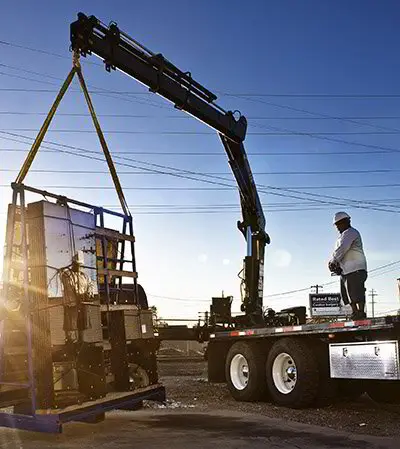
- Mill, farm-supply and utility crews running knuckle boom trucks: articulating crane prep aimed at NCCCO's ABC, ABL and ABW.
- Builders in the Treasure Valley setting trusses and materials with telehandlers: our telehandler course, built around NCCCO's THO exams.
If you have never operated, pass on the four-day prep and begin with the 3-week or 5-week initial course.
Where an Idaho Crane Career Can Go
Over a career, an Idaho operator may bounce between construction, farming, timber and energy work as jobs open and close. Adding credentials keeps those doors open. Our article on continuous learning in crane operation explains why ongoing training matters after the first card.
For wage data in Idaho, see the U.S. Bureau of Labor Statistics Occupational Employment and Wage Statistics for crane and tower operators (53-7021). A CCO card runs five years, so start renewing in year five to stay covered.
Operators in smaller Idaho towns often wear several hats, running a boom truck one week and rigging for a larger crane the next. Holding credentials for each of those roles makes that kind of work easier to land.