
Topeka's Crane Users
Being the state capital gives Topeka a deep bench of public employers, including state facilities and city and county public works crews. It also has manufacturing, rail and distribution work, utilities and a construction sector that handles everything from road projects along the Kansas River to commercial buildings.
We prepare these employers' people for crane operator certification, whether that means teaching at your own facility or enrolling them in open classes in Seffner, Florida. We have no Topeka office. Municipalities and counties in other states are among the organizations we have trained for, and that on-site approach carries over well to Topeka.
Training Built for Public Agencies
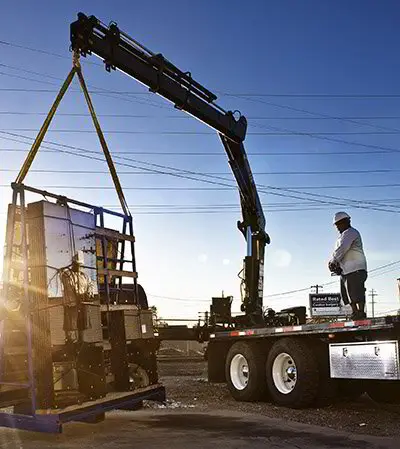
Public works crews often operate boom trucks, articulating cranes and small hydraulic cranes for sign replacement, water and sewer work, bridge maintenance and facility upkeep. Because many of these operators make only a handful of lifts each week, structured training and periodic refreshers count for even more.
For agencies, on-site training means no travel budget for each employee and no gap in coverage. Classroom time can be arranged around shifts, hands-on practice can happen on your department's own trucks, and our accredited examiners can give the NCCCO practicals on those same machines. Knuckle-boom operators can prepare for the ABC, ABL and ABW exams through our articulating crane prep course.
Supervisors and Lift Planning
In many departments, the person who signs off on lifting is a supervisor who rarely operates. That person is the audience for our crane safety course for managers, which addresses OSHA and industry compliance, preventing accidents, duties and responsibilities, lift planning, inspections, certification and limiting liability.
Combine it with operator and rigging instruction, and everyone from the field crew to the department head works from the same playbook. Departments that maintain their own cranes may also want to schedule annual or periodic inspections through our crane inspection services.
Rules and Conditions in Northeast Kansas
Kansas is not on the commonly cited list of states with their own crane operator licensing, so federal OSHA rules govern. 29 CFR 1926.1427 requires construction crane operators to hold certification for each crane type, and a public employer is free to set a tougher internal policy. Our Kansas overview page explains how this works across the state.
Topeka's weather includes spring tornado season, summer heat and winter ice storms. Storm cleanup often falls to utility and public works crews, and that is exactly when good training on power line clearance and lifts around damaged structures pays off. OSHA 1926.1408 lays out the procedures for working near energized lines, and we cover them in every operator class.
Booking Training
Send us a headcount, a list of the equipment your people run and any certification renewal dates coming up. From there we will suggest on-site dates or point individuals to an open-enrollment class in Seffner. Questions about scheduling go through our contact page.
Public employers often need quotes and paperwork well ahead of the training date, so reach out early in your budget cycle. Grouping renewals helps as well: with CCO cards good for five years, recertifying several operators during one visit is usually more efficient than scheduling them separately. If some employees only need rigging or signal training, they can join the same session for those modules, keeping the whole department on one standard.