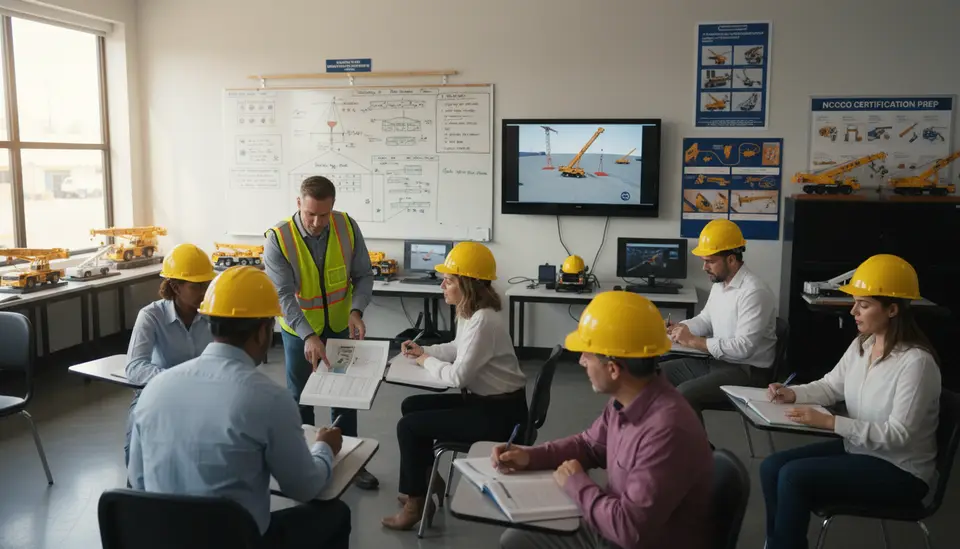
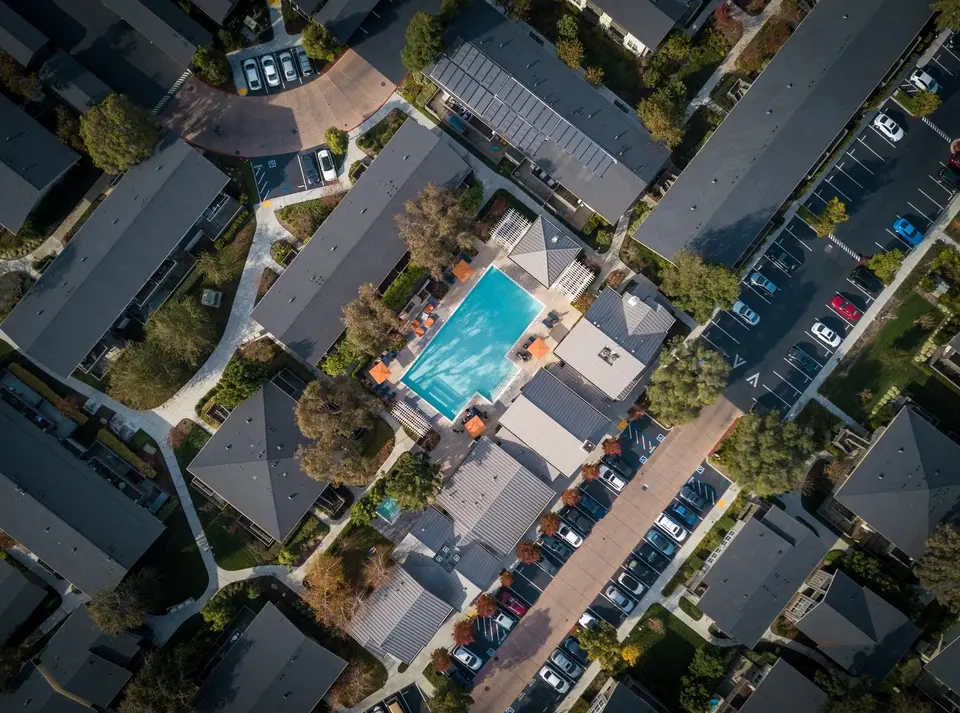
Mobile crane lifting materials beside a university building with students walking nearby
Ann Arbor, Michigan

Crane Operator Training for Ann Arbor Projects

University buildings, medical facilities and downtown infill keep Ann Arbor cranes working close to students, patients and traffic. Prepare your crew for NCCCO certification.

Building Around a Major University

Ann Arbor's skyline is shaped by the University of Michigan and its medical center, and a large share of local crane work happens on campus or near it. Residence halls, research labs, hospital additions and parking structures go up beside classrooms and clinics that never close. Downtown, mid-rise infill puts cranes on small lots surrounded by pedestrians.

Operators on these jobs need more than stick skills. Crane operator training for Ann Arbor contractors has to stress swing-radius control, clear communication with signalpersons, and lift plans that account for people walking past the barricades.

Hospital work adds its own constraints. Lifts may need to happen during set windows to avoid helicopter traffic, deliveries or patient movement, and air intakes on the roof can limit where a crane is allowed to idle. Those details are planned by the project team, but an operator who understands why the window is tight is less likely to rush a pick to make it.

Programs Worth a Look

For experienced operators

The mobile crane certification prep program prepares experienced operators for NCCCO TSS, TLL and LAT written and practical exams, and serves operators recertifying at the end of their five-year cycle.

For crews working around occupied buildings

Signalpersons are central when a load lands on a roof or into a courtyard out of the operator's line of sight. The signalperson qualification and certification program covers standard hand and voice signals and NCCCO exam prep.

For project managers

Owners and campus facility staff often expect contractors to show strong lift planning. The Managing Crane Safety class covers responsibilities, planning, inspections and OSHA compliance for management personnel.

Your Two Options for Training

The Crane School is based in Seffner, Florida, and has no Michigan office. Ann Arbor employers can bring instructors to their own facility for group classes. Our staff includes NCCCO-accredited practical examiners, so practical exams can be scheduled on-site on the cranes your people use every day. On-site group training also avoids pulling several key people off a campus project at once, because you can stagger who sits in class and who keeps the job moving.

Individuals can travel to Seffner for open enrollment instead. The mobile crane prep runs once a month from Friday to Monday, and CCO written exams are held monthly at the training center. Detroit Metropolitan Airport is close to Ann Arbor, and flights into Tampa International put you a short drive from the school.

Michigan's Regulatory Picture

Michigan is not among the states commonly cited as having a separate state crane operator license. Workplace safety in Michigan is administered by MIOSHA, the state's OSHA-approved plan, which must be at least as effective as federal OSHA, and employers or project owners may set stricter rules. Check MIOSHA's current construction standards before work begins.

For statewide context, see our Michigan crane certification page.

Winter and Scheduling

Southeast Michigan winters bring snow, ice and short days, all of which slow outdoor exams. Contractors who want on-site sessions often schedule them in spring or fall, while individuals who need to certify in January sometimes choose Florida. Either way, call our office Monday through Friday, 7:00 AM to 4:00 PM Eastern, or send an enrollment request to check open dates. Operators preparing on their own may find our NCCCO prep tips a useful start.

Frequently Asked Questions

Do campus construction projects require NCCCO-certified operators?

For construction work, OSHA requires certified crane operators, and NCCCO is a common way to meet that. Many owners and general contractors also write certification into their own requirements.

Can we train signalpersons without training operators?

Yes. Signalperson qualification and certification is a separate program and can be delivered on-site on its own.

What should an Ann Arbor student bring to Seffner?

Hard-toe footwear, a hard hat, gloves, work clothes and government-issued photo ID with a valid driver's license. Course materials are supplied.

The Crane School

Training Programs & Services

All programs are delivered in compliance with current OSHA regulations.

Mobile Crane Operator Certification Prep Program

For experienced operators ready to certify or recertify. Includes NCCCO TSS, TLL and LAT written and practical exams.

Learn more about Mobile Crane Certification Prep

Initial Mobile Crane Operator Training Program

For people with little or no crane experience. 3-week (TSS/TLL) and 5-week (adds LAT) programs with NCCCO exams.

Learn more about Initial Mobile Crane Training (3 & 5 Week)

Articulating Crane Operator Certification Prep Program

For knuckle-boom operators. Prepares you for the NCCCO ABC, ABL and ABW written and practical exams.

Learn more about Articulating Crane Certification Prep

Rigger Qualification / Certification Program

For personnel who rig loads to cranes — supports your rigger qualification and NCCCO Rigger Level I/II exams.

Learn more about Rigger Level 1 & 2

Signalperson Qualification / Certification Program

Standard hand and voice signals for directing cranes, plus preparation for the NCCCO Signalperson exams.

Learn more about Signalperson

Managing Crane Safety Class

For managers and supervisors: OSHA compliance, lift planning, inspections, certification and liability.

Learn more about Managing Crane Safety

Telehandler Operator Program

Certification or recertification for telehandler operators. Includes the NCCCO THO written and practical exams.

Learn more about Telehandler Operator

Crane Inspection Services

Annual, monthly, post-assembly and post-incident inspections plus load testing by NCCCO-certified inspectors.

Learn more about Crane Inspections

Related Reading

Crane Operator Practice Test

Ten quick questions on crane safety rules and NCCCO basics. Pick one answer per question — your score shows on the next page.

1. Which OSHA standard covers cranes and derricks used in construction?
2. How long is an NCCCO crane operator certification valid before recertification?
3. What does NCCCO stand for?
4. Under OSHA's current construction crane rule, operator certification must be obtained by:
5. Under OSHA Table A (1926.1408), what is the minimum clearance from power lines rated up to 50 kV?
6. When is a signal person required?
7. Whose emergency stop signal must a crane operator obey?
8. What does an anti-two-block device prevent?
9. Which document gives a crane's rated capacity for a given boom length and radius?
10. Which NCCCO designation covers telescopic boom cranes with a swing cab?