
West Michigan's Working Cranes
Grand Rapids grew up as a furniture-making city, and manufacturing remains a big part of West Michigan's economy. Plants, warehouses and the city's large hospital and medical-education campuses drive much of the lifting work, along with downtown residential and office construction along the Grand River.
Lake Michigan also has a say. Lake-effect snow can bury a site overnight, and that affects ground conditions, setup and visibility. Crane certification classes for Grand Rapids crews should connect exam material to the conditions operators face here from November through March. Snow hides soft spots and buried obstructions under outrigger pads, and wet, heavy snow on a load or on the boom adds weight that the load chart does not show. Operators who certify here should be able to explain both problems to a supervisor in plain terms.
Matching Machines to Programs
West Michigan contractors run a wide spread of equipment, so it pays to sort your people by machine:
Rough-terrain telehandlers
Common on residential, warehouse and roofing jobs. The telehandler operator program prepares operators for NCCCO THO exams.
Boom trucks and knuckle booms
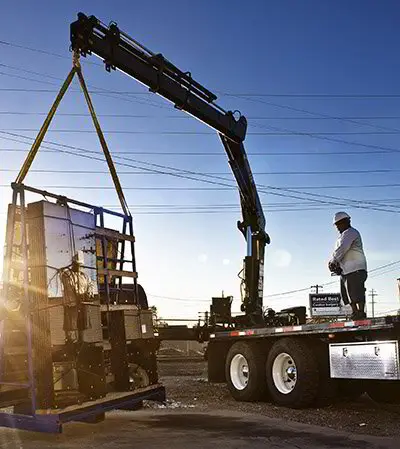
Supply yards and sign and HVAC companies often run articulating units. The articulating crane prep program covers ABC, ABL and ABW exams.
Telescopic and lattice boom cranes
Experienced operators prepare for TSS, TLL and LAT exams in the mobile crane prep course; beginners start with the initial training program. If an operator runs more than one type, each certification is tested separately, so plan time for every exam they need.
Bringing Instructors to Grand Rapids
Our sole training center is in Seffner, Florida. For a manufacturer or contractor with several workers to certify, it is often more efficient to have instructors come to you. Classes run at your facility, and accredited examiners can schedule NCCCO practical exams there as well.
An on-site visit works best when you plan ahead: confirm which employees are testing on which equipment, make sure the cranes are in good working order, and set aside a level, clear area for the exam course.
Many West Michigan plants also have in-house maintenance crews who rig and move equipment a few times a year. Adding rigger qualification to the visit gives those workers a consistent standard and supports the employer's own qualified-rigger process under OSHA. The practical value shows up the next time a line is rearranged.
Traveling to Seffner for Open Enrollment
Individuals can fly to Tampa International and attend open classes in Seffner. Multi-week programs follow a Monday-through-Thursday schedule, and the mobile crane prep runs one long weekend a month. For a West Michigan operator, a January or February class in Florida can be a practical way to certify without waiting for the snow to clear. Our enrollment team can help you choose a date. Plan a travel day on each end of the class so you arrive rested, and book lodging early; the school has a negotiated rate at a nearby hotel.
Rules That Apply in Michigan
Michigan is not commonly cited for a separate state crane operator license. Its OSHA-approved state plan, MIOSHA, enforces workplace safety and must be at least as effective as federal OSHA, and employers can set stricter rules. Check MIOSHA's current crane standards before starting work. Our Michigan training overview has more. For crews heading into winter, our piece on cold-weather crane safety is worth sharing.