State Requirements on Top of Federal OSHA
Minnesota has state-level crane operator requirements in addition to OSHA. Confirm current rules with the state agency and NCCCO's state licensing information before you work there. Because the details can change, we recommend checking them each time you plan a new certification cycle rather than relying on what a coworker remembers.
The federal baseline still applies. OSHA's 29 CFR 1926 Subpart CC requires construction crane operators to be certified by type, and Minnesota administers workplace safety through its OSHA-approved state plan, often called MNOSHA. For most operators, Minnesota crane operator certification starts with passing the NCCCO written and practical exams for the cranes they actually run.
NCCCO develops and administers those exams. Our job is to get you ready for them and, through our accredited practical examiners, to schedule practical testing where it makes sense for you.
From the Iron Range to the Twin Cities
Minnesota's lifting work covers a wide range. In the Minneapolis and St. Paul metro, commercial towers, healthcare campuses and infrastructure projects keep mobile and tower cranes busy. Up north, the Iron Range mining region relies on heavy equipment for taconite operations, though work on mine property generally falls under MSHA rather than OSHA construction rules.
The Port of Duluth on Lake Superior handles bulk cargo and supports dock and marine construction. Southern and western Minnesota have wind energy projects and agricultural processing plants, both of which call for cranes in open, windy country. Grain handling facilities and food processors need riggers and operators during expansions and maintenance outages.
Across all of it, operators deal with temperature extremes. Cold affects hydraulic response, wire rope and the ground under outriggers, and spring thaw can turn a firm laydown yard soft in a week.
Scheduling Training Around a Minnesota Winter
Most Minnesota contractors try to certify before the building season ramps up. There are two ways to do it with The Crane School.
On-site training brings our instructors to your facility anywhere in Minnesota. Classroom work can happen indoors no matter the weather, and our accredited practical examiners can schedule CCO practical exams at your location when site conditions allow. This is usually the efficient choice for a crew of several operators, riggers or signalpersons.
The alternative is open enrollment at our training facility in Seffner, Florida, east of Tampa. Monthly written exams are held there, and multi-week beginner programs run full-time Monday through Thursday. A winter trip south lets an operator practice and test without fighting frozen ground. Upcoming sessions are on the class schedule.
Program Guidance for Minnesota Employers
Building a lattice-capable crew
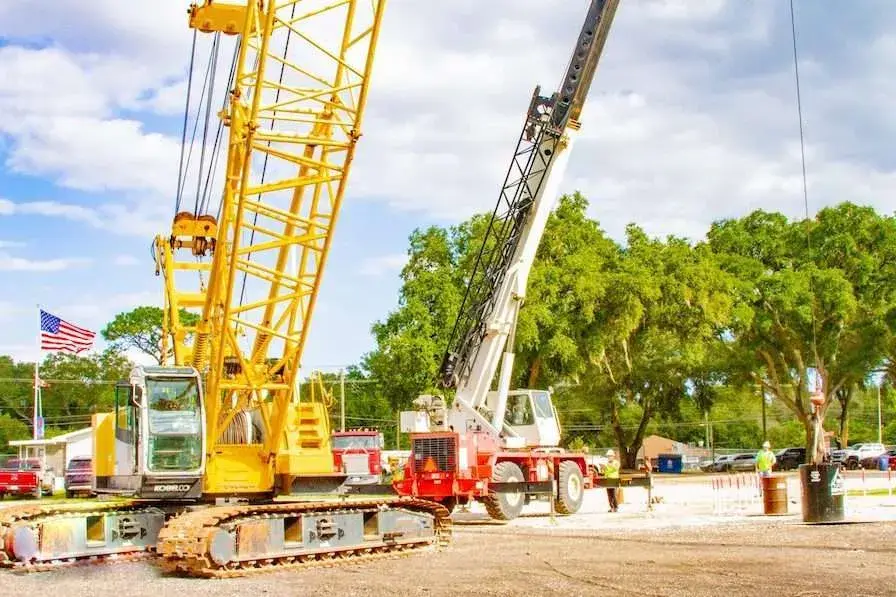
Heavy industrial and energy projects often need crawler cranes. The 5-week version of our initial mobile crane operator training program covers telescopic and lattice boom cranes and includes NCCCO TSS, TLL and LAT exams, making it a fit for newer operators headed toward that work.
Material handling on commercial sites
Telehandlers do much of the lifting on Minnesota building projects. The telehandler operator program prepares operators for the NCCCO THO written and practical exams, for initial certification or renewal.
Supervisors
Foremen and project managers responsible for crane compliance can take the Managing Crane Safety Class, which covers OSHA and industry compliance, planning, inspections and liability.
What Minnesota Safety Managers Should Keep on File
With both federal and state expectations in play, documentation matters. A sound crane file for a Minnesota employer usually includes:
- Copies of each operator's NCCCO certification, showing the crane types covered and the expiration date
- Records of any state-level credentials and their renewal dates
- Rigger and signalperson qualification records for the people who hook loads and direct lifts
- Annual, monthly and post-incident inspection records for each crane
Keeping those records current makes audits and owner prequalification far less painful. If inspections are a gap, our NCCCO certified inspectors can help with annual, monthly and post-incident work, plus load testing as needed. A supervisor who has taken a crane safety management course will know what belongs in the file and why.
Long-Haul Career Planning
A Minnesota crane career can follow several tracks: metro construction, industrial maintenance, energy, or a mix depending on the season. Operators who add lattice boom certification and rigging credentials tend to stay busy as project types shift. Our crane operator career progression guide lays out common steps.
Wage questions are best answered by the U.S. Bureau of Labor Statistics, which publishes Occupational Employment and Wage Statistics for crane and tower operators (53-7021) by state and metro area. We do not quote figures. For a refresher on the overall process, see our step-by-step guide to crane operator certification.