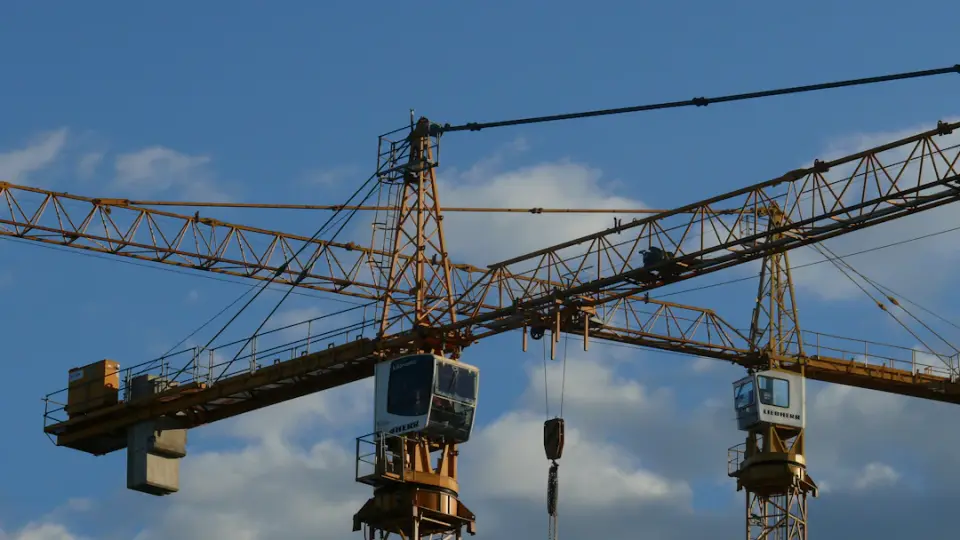
Tower crane over a downtown construction site with snow on the ground
Minneapolis, Minnesota

NCCCO Crane Certification for Minneapolis Crews

Downtown towers, river-front redevelopment and winter construction keep Minneapolis cranes running year-round. Prepare your operators and lift crews to certify.

Building Through Minnesota Winters

Minneapolis does not stop building when the temperature drops. Downtown office and residential towers, hospital and university projects, and redevelopment along the Mississippi River keep cranes on the skyline through the coldest months. Contractors heat enclosures, pour concrete under blankets and keep lifting, which means crane crews work in conditions that would shut down sites in warmer states.

NCCCO crane certification for Minneapolis operators sits on top of that winter experience. The exams test load charts, setup and controls, and Twin Cities crews also need the judgment to apply those skills on snow, ice and frozen ground.

Programs for Twin Cities Contractors

  • Tower and mobile crane operators on commercial work: experienced operators prep for NCCCO TSS, TLL and LAT exams through mobile crane certification prep.
  • Signalpersons: downtown lots and enclosed pours put the landing zone out of sight. The signalperson certification program covers standard hand and voice signals and NCCCO exam prep.
  • Supervisors: the Managing Crane Safety class gives superintendents and safety managers a grounding in lift planning, inspections, certification and OSHA compliance.
  • New operators: people without seat time start with initial mobile crane training at our Florida campus.

Large general contractors often train a full lift team at once so everyone shares the same vocabulary.

Subcontractors matter too. Steel erectors, precast installers and mechanical contractors often bring their own cranes or boom trucks to a Minneapolis tower job. When a general contractor sets a site-wide expectation that every operator holds a current CCO card for the equipment they run, and every signalperson is qualified, the lift plan is much easier to enforce.

Snow Load, Wind Chill and Setup

Two winter issues come up again and again on Minneapolis jobs. First, snow and ice add weight to loads, rigging and the boom itself, and that weight is not on the load chart. Second, frozen ground can feel solid until a thaw softens it beneath outrigger pads. Operators who understand both are far less likely to be surprised mid-lift.

Wind is the third factor. Downtown buildings channel gusts between towers, and a large panel or formwork section can catch more wind than its weight suggests. Our blog on extreme-weather crane safety is a good refresher before the season.

Training in Minneapolis or in Seffner

Our only training facility is in Seffner, Florida, east of Tampa. Twin Cities employers can bring our instructors to their own yard for classes, and accredited practical examiners can schedule NCCCO practical exams on-site. Individuals can also enroll in open classes in Seffner, where multi-week programs run Monday through Thursday and CCO written exams are offered monthly. Check the class schedule before booking.

For contractors who build through the winter, the best on-site window is often late spring or early fall, when the yard is dry and crews are between peak pours. Planning certification around the season keeps the practical exam from competing with a heated enclosure for space.

State Requirements

Minnesota has state-level crane operator requirements in addition to OSHA, so confirm current rules with the state agency and NCCCO's state licensing information before you work there. Minnesota also runs its own OSHA-approved state plan. For statewide training options, see our Minnesota NCCCO prep page.

Frequently Asked Questions

Can our signalpersons and riggers train while operators are on a project?

Yes. Ground crew programs can be scheduled separately from operator training, which helps keep active projects staffed.

Is NCCCO certification valid across state lines?

NCCCO certification is a national credential valid for five years, but individual states can add their own requirements, so check each state where you work.

What's included when I train in Seffner?

Training materials and handouts are provided. Bring hard-toe footwear, a hard hat, gloves, work clothes and a government-issued photo ID.

The Crane School

Training Programs & Services

All programs are delivered in compliance with current OSHA regulations.

Mobile Crane Operator Certification Prep Program

For experienced operators ready to certify or recertify. Includes NCCCO TSS, TLL and LAT written and practical exams.

Learn more about Mobile Crane Certification Prep

Initial Mobile Crane Operator Training Program

For people with little or no crane experience. 3-week (TSS/TLL) and 5-week (adds LAT) programs with NCCCO exams.

Learn more about Initial Mobile Crane Training (3 & 5 Week)

Articulating Crane Operator Certification Prep Program

For knuckle-boom operators. Prepares you for the NCCCO ABC, ABL and ABW written and practical exams.

Learn more about Articulating Crane Certification Prep

Rigger Qualification / Certification Program

For personnel who rig loads to cranes — supports your rigger qualification and NCCCO Rigger Level I/II exams.

Learn more about Rigger Level 1 & 2

Signalperson Qualification / Certification Program

Standard hand and voice signals for directing cranes, plus preparation for the NCCCO Signalperson exams.

Learn more about Signalperson

Managing Crane Safety Class

For managers and supervisors: OSHA compliance, lift planning, inspections, certification and liability.

Learn more about Managing Crane Safety

Telehandler Operator Program

Certification or recertification for telehandler operators. Includes the NCCCO THO written and practical exams.

Learn more about Telehandler Operator

Crane Inspection Services

Annual, monthly, post-assembly and post-incident inspections plus load testing by NCCCO-certified inspectors.

Learn more about Crane Inspections

Related Reading

Crane Operator Practice Test

Ten quick questions on crane safety rules and NCCCO basics. Pick one answer per question — your score shows on the next page.

1. Which OSHA standard covers cranes and derricks used in construction?
2. How long is an NCCCO crane operator certification valid before recertification?
3. What does NCCCO stand for?
4. Under OSHA's current construction crane rule, operator certification must be obtained by:
5. Under OSHA Table A (1926.1408), what is the minimum clearance from power lines rated up to 50 kV?
6. When is a signal person required?
7. Whose emergency stop signal must a crane operator obey?
8. What does an anti-two-block device prevent?
9. Which document gives a crane's rated capacity for a given boom length and radius?
10. Which NCCCO designation covers telescopic boom cranes with a swing cab?