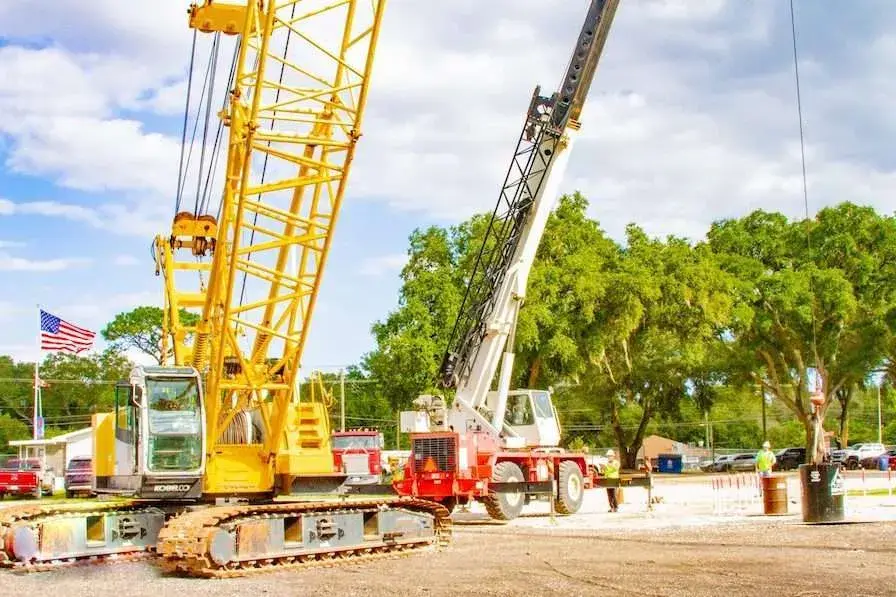

Crane lifting rooftop equipment beside a hospital building
Rochester, MN

Crane Certification Prep for Rochester, Minnesota

Medical campus construction and the farm country around it ask very different things of crane crews. Find the NCCCO prep path that suits your Rochester team.

A Medical City Surrounded by Farmland

Rochester is best known as the home of the Mayo Clinic, and healthcare construction dominates the city's skyline. Medical buildings, parking structures, hotels and research space rise in a dense downtown where patients and visitors are always nearby. Drive a few miles out and the work changes completely: grain bins, livestock buildings, ag processing and rural utility projects.

Crane certification prep for Rochester, MN crews has to account for both settings. One crew may set rooftop equipment next to a clinic in the morning and help a farm builder raise trusses later in the week. Winters in southeast Minnesota are cold and windy on open ground, and rural sites rarely have the paved, level staging that a downtown job has, so setup skills matter just as much in the country as in the city.

Programs by Type of Work

Downtown and healthcare projects

Experienced operators prepare for TSS, TLL and LAT exams through the mobile crane certification prep program. Signalperson and rigger training help crews manage lifts near occupied buildings where the operator cannot see every step.

Rural and agricultural building

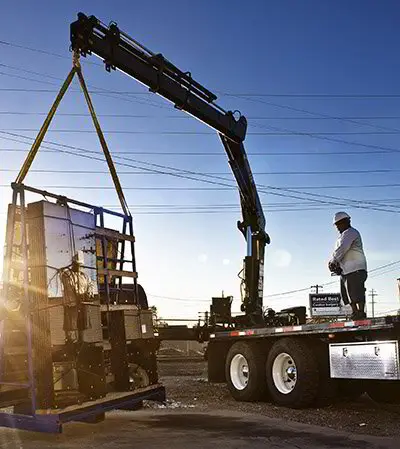
Telehandlers and boom trucks do much of the lifting on farm and rural commercial sites. The telehandler operator program covers NCCCO THO exams, and the articulating crane program covers ABC, ABL and ABW exams for knuckle-boom equipment.

First-time operators

The initial mobile crane training runs three or five weeks in Florida for people with little or no experience.

Working Near Patients and the Public

Hospital projects tend to carry stricter owner requirements than typical commercial work. Lifts may be restricted to certain hours, exclusion zones may extend onto sidewalks, and rooftop air intakes can limit where equipment is placed. Contractors bidding that work often find that a well-documented training record makes the conversation with the owner easier.

The Managing Crane Safety class helps project managers build that record, with coverage of planning, inspections, certification and liability. Read our post on crane safety management for practical habits that carry over to any healthcare job.

How Training Reaches Rochester

The Crane School does not have a Rochester office; our training center is in Seffner, Florida. Employers with a group can host on-site classes at their own facility, and our accredited practical examiners can schedule NCCCO practical exams there.

Individuals can travel to Seffner for open enrollment. The monthly mobile crane prep runs Friday through Monday, with optional practice time the Thursday before. Contact our enrollment team to find a date that works.

When you weigh the two options, count heads. One or two operators can usually travel to Florida with little disruption. A crew of six that includes operators, riggers and signalpersons is usually easier to train at home, where nobody spends days in airports and the practical exam happens on the same equipment they will use on Monday.

Minnesota's Extra Requirements

Minnesota has state-level crane operator requirements in addition to OSHA. Confirm current rules with the state agency and NCCCO's state licensing information before you work there. Contractors from Rochester who also work in Iowa or Wisconsin should look up those states separately. Our Minnesota training page gathers statewide information, and federal OSHA rules for construction cranes apply as well.
Frequently Asked Questions

Do farm builders need NCCCO certification for telehandlers?

It depends on the work and the employer. OSHA's crane rules apply to construction, and some telehandler configurations are treated as cranes. Many employers choose NCCCO THO certification to show competence either way.

Can we combine telehandler and articulating crane training in one on-site visit?

Often, yes. Tell us your equipment and headcount so we can plan the schedule.

How long does a CCO card last?

Five years. Plan recertification during the final year so there is no gap.

The Crane School

Training Programs & Services

All programs are delivered in compliance with current OSHA regulations.

Mobile Crane Operator Certification Prep Program

For experienced operators ready to certify or recertify. Includes NCCCO TSS, TLL and LAT written and practical exams.

Learn more about Mobile Crane Certification Prep

Initial Mobile Crane Operator Training Program

For people with little or no crane experience. 3-week (TSS/TLL) and 5-week (adds LAT) programs with NCCCO exams.

Learn more about Initial Mobile Crane Training (3 & 5 Week)

Articulating Crane Operator Certification Prep Program

For knuckle-boom operators. Prepares you for the NCCCO ABC, ABL and ABW written and practical exams.

Learn more about Articulating Crane Certification Prep

Rigger Qualification / Certification Program

For personnel who rig loads to cranes — supports your rigger qualification and NCCCO Rigger Level I/II exams.

Learn more about Rigger Level 1 & 2

Signalperson Qualification / Certification Program

Standard hand and voice signals for directing cranes, plus preparation for the NCCCO Signalperson exams.

Learn more about Signalperson

Managing Crane Safety Class

For managers and supervisors: OSHA compliance, lift planning, inspections, certification and liability.

Learn more about Managing Crane Safety

Telehandler Operator Program

Certification or recertification for telehandler operators. Includes the NCCCO THO written and practical exams.

Learn more about Telehandler Operator

Crane Inspection Services

Annual, monthly, post-assembly and post-incident inspections plus load testing by NCCCO-certified inspectors.

Learn more about Crane Inspections

Related Reading

Training Program

Telehandler Operator Certification Program

Telehandler certification prep for the NCCCO THO written and practical exams, fixed or rotating. Certify or recertify. Join the list for upcoming dates.

Crane Operator Practice Test

Ten quick questions on crane safety rules and NCCCO basics. Pick one answer per question — your score shows on the next page.

1. Which OSHA standard covers cranes and derricks used in construction?
2. How long is an NCCCO crane operator certification valid before recertification?
3. What does NCCCO stand for?
4. Under OSHA's current construction crane rule, operator certification must be obtained by:
5. Under OSHA Table A (1926.1408), what is the minimum clearance from power lines rated up to 50 kV?
6. When is a signal person required?
7. Whose emergency stop signal must a crane operator obey?
8. What does an anti-two-block device prevent?
9. Which document gives a crane's rated capacity for a given boom length and radius?
10. Which NCCCO designation covers telescopic boom cranes with a swing cab?