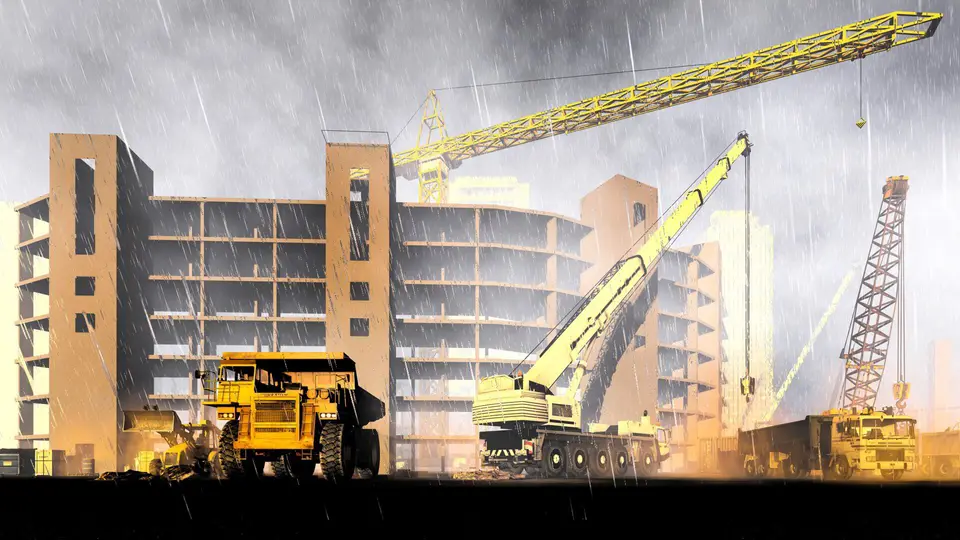
Mobile crane lifting conveyor sections at a grain elevator on the Montana plains
Central Montana

Crane Certification Training in Great Falls, Montana

Hydroelectric dams, grain handling, a major Air Force base and steady wind define crane work around Great Falls. Get your crew ready for NCCCO exams.

The Electric City's Lifting Work

Great Falls takes its nickname, the Electric City, from the hydroelectric dams on the Missouri River, and maintaining that infrastructure involves heavy lifting. The city is also home to Malmstrom Air Force Base, serves as a hub for the grain farms of Central Montana, and has regional healthcare and commercial construction.

Grain elevators, bins and ag processing plants are a big part of the picture. Lifting conveyors, legs and bin components high off the ground in open country calls for careful planning. These picks often involve long, light pieces at high hook heights, where a small swing at the base becomes a large movement at the top. Crane certification training in Great Falls has to reflect that mix of industrial, agricultural and public work.

Programs by Type of Job

Grain and agricultural facilities

Tall, light structures and long components are sensitive to wind and rigging angles. The rigger qualification and certification program prepares workers for NCCCO Rigger Level I and II exams.

Utility and dam maintenance

Experienced operators prepare for TSS, TLL and LAT exams through mobile crane certification prep. Crews new to cranes start with initial mobile crane operator training.

Construction and material handling

Telehandlers are common on farm and commercial sites; the telehandler program covers NCCCO THO exams.

Federal and contractor work

Government projects typically come with detailed safety requirements. The Managing Crane Safety class helps supervisors understand planning, inspections and compliance.

When the Wind Picks Up

Central Montana is known for strong, gusty wind, especially along the Rocky Mountain Front to the west. A crane that is well within capacity can still be in trouble if a long or flat load catches a gust. Operators need to understand how manufacturers specify wind limits, how to measure wind at the boom tip rather than at ground level, and when to set a load down and wait.

Our article on weather and crane safety covers wind, cold and other conditions Central Montana crews deal with. Winter adds deep cold and blowing snow, and frozen ground that thaws unevenly in spring is a common setup hazard on farm and rural sites.

Two Ways to Train

The Crane School is located in Seffner, Florida, and has no Montana office. Great Falls employers can host on-site classes at their own facility, and our accredited practical examiners can schedule NCCCO practical exams there. Individuals can fly into Tampa International and join open-enrollment classes; CCO written exams are offered every month at the Seffner site. See the training calendar for upcoming dates.

For ag businesses, the slower months after harvest are often the best time to bring in instructors, because crews and equipment are available and the facility is quieter. Multi-week initial programs in Florida meet Monday through Thursday, 7:00 AM to 4:00 PM, so a new operator should plan to be away for three to five weeks.

Montana Requirements

Montana has state-level crane operator requirements in addition to OSHA. Confirm current rules with the state agency and NCCCO's state licensing information before you work there. Work on federal property may carry additional requirements set by the agency or contract, so read bid documents closely. Hydroelectric and utility owners often have their own crane and rigging procedures as well. See our Montana NCCCO prep page for more.
Frequently Asked Questions

Can grain facility crews train on-site?

Yes. On-site sessions can be held at your facility as long as there is a safe area for practical exams and equipment that meets NCCCO's requirements.

How do I know whether an operator needs prep or initial training?

The prep program assumes real operating experience. If someone has little or no seat time, the initial program is the right start.

Who issues the certification?

NCCCO issues certifications. The Crane School prepares candidates and our accredited examiners can administer practical exams.

The Crane School

Training Programs & Services

All programs are delivered in compliance with current OSHA regulations.

Mobile Crane Operator Certification Prep Program

For experienced operators ready to certify or recertify. Includes NCCCO TSS, TLL and LAT written and practical exams.

Learn more about Mobile Crane Certification Prep

Initial Mobile Crane Operator Training Program

For people with little or no crane experience. 3-week (TSS/TLL) and 5-week (adds LAT) programs with NCCCO exams.

Learn more about Initial Mobile Crane Training (3 & 5 Week)

Articulating Crane Operator Certification Prep Program

For knuckle-boom operators. Prepares you for the NCCCO ABC, ABL and ABW written and practical exams.

Learn more about Articulating Crane Certification Prep

Rigger Qualification / Certification Program

For personnel who rig loads to cranes — supports your rigger qualification and NCCCO Rigger Level I/II exams.

Learn more about Rigger Level 1 & 2

Signalperson Qualification / Certification Program

Standard hand and voice signals for directing cranes, plus preparation for the NCCCO Signalperson exams.

Learn more about Signalperson

Managing Crane Safety Class

For managers and supervisors: OSHA compliance, lift planning, inspections, certification and liability.

Learn more about Managing Crane Safety

Telehandler Operator Program

Certification or recertification for telehandler operators. Includes the NCCCO THO written and practical exams.

Learn more about Telehandler Operator

Crane Inspection Services

Annual, monthly, post-assembly and post-incident inspections plus load testing by NCCCO-certified inspectors.

Learn more about Crane Inspections

Related Reading

Crane Operator Practice Test

Ten quick questions on crane safety rules and NCCCO basics. Pick one answer per question — your score shows on the next page.

1. Which OSHA standard covers cranes and derricks used in construction?
2. How long is an NCCCO crane operator certification valid before recertification?
3. What does NCCCO stand for?
4. Under OSHA's current construction crane rule, operator certification must be obtained by:
5. Under OSHA Table A (1926.1408), what is the minimum clearance from power lines rated up to 50 kV?
6. When is a signal person required?
7. Whose emergency stop signal must a crane operator obey?
8. What does an anti-two-block device prevent?
9. Which document gives a crane's rated capacity for a given boom length and radius?
10. Which NCCCO designation covers telescopic boom cranes with a swing cab?