

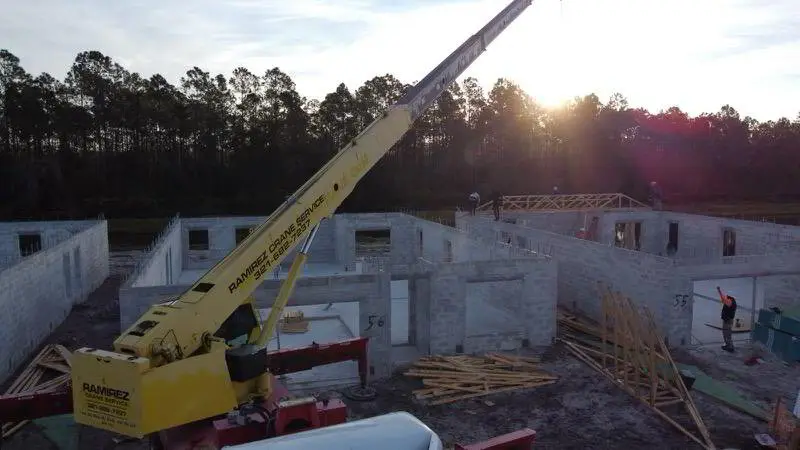
Mobile crane lifting equipment at an industrial site on a cold day near Bismarck, North Dakota
Bismarck-Mandan area

Crane Operator Training and NCCCO Certification in Bismarck, ND

NCCCO prep for energy, utility and construction crews in central North Dakota, delivered at your yard or at our Florida training center.

Lifting in the Capital City and Along the Missouri

Bismarck is North Dakota's capital and a service center for a wide stretch of the central part of the state. Crane work here ranges from state and commercial buildings to bridge and riverbank projects along the Missouri River, and from utility substations to the lignite coal mines and power plants that the region is known for.

Many of those lifts happen on industrial sites with strict safety programs, where crane operator training in Bismarck, ND is expected to end in a recognized certification. NCCCO certification fits that expectation because it is national, third-party and tied to the specific crane type you run.

Outage Season and Plant Work

Power plants and processing facilities schedule much of their heavy maintenance into planned outages. Those windows are short and busy, with mobile cranes setting and pulling large components while several contractors work around them.

For that kind of work, experienced operators often take the mobile crane certification prep program to earn or renew TSS, TLL or LAT certifications. Plant riggers and signalpersons are just as important when lifts are made inside congested structures. If your company sends crews into outages, getting certifications sorted in the months before the outage keeps the gate check simple.

Working Through a North Dakota Winter

Central North Dakota winters are long and harsh. Cold changes how a crane behaves: hydraulic oil needs time to warm, steel is less forgiving of shock loading, and ice on mats and access steps creates slip hazards. Wind chill also shortens how long a signalperson can stand exposed.

Spring brings its own risk. As frozen ground thaws, soil that held a crane in February can soften quickly, so outrigger support deserves a fresh look. Our post on crane safety in extreme weather covers several of these points.

Scheduling around the weather

On-site practical exams need safe conditions. Many North Dakota employers find late spring through early fall the easiest window for testing outdoors.

On-Site Training or the Trip to Seffner

The Crane School is based in Seffner, Florida, near Tampa, and has no Bismarck office. For employers with several operators, our instructors travel to your location, teach the classroom portion, and our accredited practical examiners run exams on your cranes.

On-site visits work well for recertification groups, too. If several of your operators are within their final year before expiry, testing them together saves travel and keeps everyone on the same renewal cycle. We can include riggers and signalpersons in the same visit when your site has room.

Individuals can fly from Bismarck to Tampa with a connection and attend an open-enrollment class. A winter trip to Florida for training is a practical way to use the slow season. See the current schedule for class dates.

Licensing Notes for North Dakota

North Dakota does not have a separate state crane operator license. Federal OSHA rules govern, including operator certification under 29 CFR 1926.1427 for construction work, and employers or plant owners may set stricter requirements. Utilities and mining operations may also have their own qualification programs, and mine sites can fall under MSHA rather than OSHA, so confirm which rules apply before you mobilize. For state-wide program details, see our North Dakota training overview.
More North Dakota Training Locations

Frequently Asked Questions

Can a Bismarck company schedule practical exams on its own cranes?

Yes. Our accredited practical examiners can test candidates on your equipment, as long as the crane and test site meet NCCCO requirements.

Is winter a bad time to take crane training in North Dakota?

Outdoor practical testing is harder in deep cold and snow, so many employers test in warmer months. Individuals can also train in Florida during winter.

How often do I need to renew my NCCCO crane certification?

Every five years. Recertification requires passing the written exam for your specialty, with practical requirements set by NCCCO's current recertification rules.

The Crane School

Training Programs & Services

All programs are delivered in compliance with current OSHA regulations.

Mobile Crane Operator Certification Prep Program

For experienced operators ready to certify or recertify. Includes NCCCO TSS, TLL and LAT written and practical exams.

Learn more about Mobile Crane Certification Prep

Initial Mobile Crane Operator Training Program

For people with little or no crane experience. 3-week (TSS/TLL) and 5-week (adds LAT) programs with NCCCO exams.

Learn more about Initial Mobile Crane Training (3 & 5 Week)

Articulating Crane Operator Certification Prep Program

For knuckle-boom operators. Prepares you for the NCCCO ABC, ABL and ABW written and practical exams.

Learn more about Articulating Crane Certification Prep

Rigger Qualification / Certification Program

For personnel who rig loads to cranes — supports your rigger qualification and NCCCO Rigger Level I/II exams.

Learn more about Rigger Level 1 & 2

Signalperson Qualification / Certification Program

Standard hand and voice signals for directing cranes, plus preparation for the NCCCO Signalperson exams.

Learn more about Signalperson

Managing Crane Safety Class

For managers and supervisors: OSHA compliance, lift planning, inspections, certification and liability.

Learn more about Managing Crane Safety

Telehandler Operator Program

Certification or recertification for telehandler operators. Includes the NCCCO THO written and practical exams.

Learn more about Telehandler Operator

Crane Inspection Services

Annual, monthly, post-assembly and post-incident inspections plus load testing by NCCCO-certified inspectors.

Learn more about Crane Inspections

Related Reading

Crane Operator Practice Test

Ten quick questions on crane safety rules and NCCCO basics. Pick one answer per question — your score shows on the next page.

1. Which OSHA standard covers cranes and derricks used in construction?
2. How long is an NCCCO crane operator certification valid before recertification?
3. What does NCCCO stand for?
4. Under OSHA's current construction crane rule, operator certification must be obtained by:
5. Under OSHA Table A (1926.1408), what is the minimum clearance from power lines rated up to 50 kV?
6. When is a signal person required?
7. Whose emergency stop signal must a crane operator obey?
8. What does an anti-two-block device prevent?
9. Which document gives a crane's rated capacity for a given boom length and radius?
10. Which NCCCO designation covers telescopic boom cranes with a swing cab?