

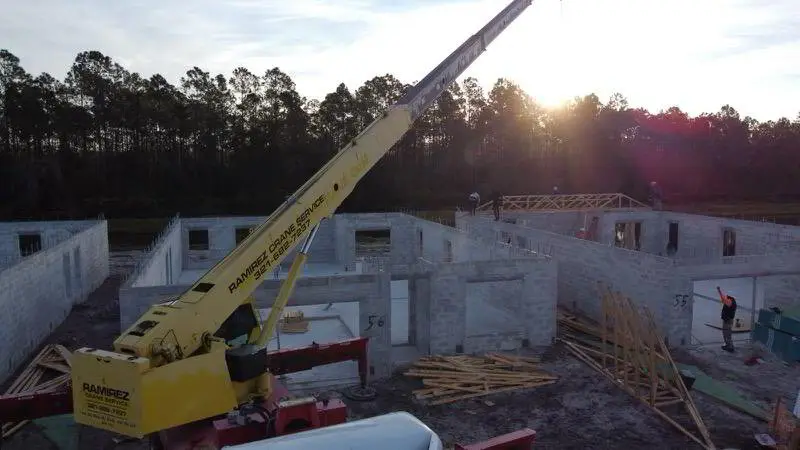
Mobile crane with long boom lifting equipment onto a grain elevator near Enid, Oklahoma
Enid, Oklahoma

NCCCO Crane Training for Enid and Northwest Oklahoma

Certification prep for crane crews serving grain storage, energy and construction work across northwest Oklahoma.

Grain, Energy and Air Force Work

Enid sits in the heart of Oklahoma's wheat country and is known for its large grain storage capacity. The surrounding region also has a long history of oil and gas production, and Vance Air Force Base sits on the city's south side. Those three pillars generate a surprising amount of crane work: elevator and bin repairs, equipment sets at processing plants, oilfield service lifts and construction on and around the base.

NCCCO crane training in Enid, OK gives the operators on those jobs a nationally recognized credential that travels with them from one employer to the next.

Working High on Elevators and Bins

Grain storage work puts cranes to work at height: replacing conveyors and legs, setting roof sections and lifting equipment onto tall structures. Those lifts involve long boom lengths, reduced capacities at radius, and loads with large surface areas.

Operators who are ready to test can prepare for the TSS, TLL or LAT exams with the mobile crane certification prep program. Because so many of these lifts rely on careful hookups at height, it pays to train riggers alongside them through the rigger qualification program.

Wind Across the Plains

Northwest Oklahoma is windy country. Steady winds and sudden gusts affect both the crane and the load, especially on long booms and with broad, light loads like panels or ductwork. Spring storms add hail, lightning and the threat of tornadoes.

Wind habits that protect your crew

  • Know the crane manufacturer's wind limits and check them against current conditions.
  • Account for the sail area of the load, not just its weight.
  • Use tag lines and a clear signal plan for long or broad loads.
  • Stop and lower loads when gusts exceed safe limits.

Our post on extreme weather crane safety goes further into planning around wind and storms.

Base, Farm and Oilfield Paperwork

Each of Enid's major industries checks credentials in its own way. Federal projects on or near the air base often reference the U.S. Army Corps of Engineers safety manual, EM 385-1-1, along with OSHA. Energy companies typically run contractor-qualification systems that ask for proof of certification before anyone sets foot on a lease. Grain cooperatives and processors may simply want to see a current card before a contractor's crane rolls through the gate.

A current NCCCO card answers the operator question in all three settings. Keeping rigger and signalperson qualification records in the same file saves time when a site safety officer asks for documentation. Remember that certifications last five years, so track expiration dates for everyone on the crew.

Getting Certified From Enid

The Crane School is based in Seffner, Florida and has no Enid office. When an employer has several people to certify, our instructors and accredited practical examiners can come to your yard for classroom training and practical exams on company cranes.

Individual operators can travel to our Seffner training center, east of Tampa, for open-enrollment classes; Oklahoma City's Will Rogers airport offers connections to Tampa. Use the contact page to ask about upcoming dates.

Oklahoma does not have a separate state crane operator license, so federal OSHA rules govern, and site owners or employers may require more. Learn more on our Oklahoma NCCCO page.
Frequently Asked Questions

Which crane certification fits grain elevator repair work?

It depends on the crane. Telescopic boom cranes are covered by the TSS or TLL certifications, and lattice boom cranes by LAT. Ask us if you are unsure which exam matches your machine.

Can practical exams be held at our Enid yard?

Yes, if the crane and test area meet NCCCO requirements, our accredited practical examiners can test candidates at your location.

Does The Crane School have an office in Enid?

No. We train at our center in Seffner, FL and travel to employers for on-site sessions.

The Crane School

Training Programs & Services

All programs are delivered in compliance with current OSHA regulations.

Mobile Crane Operator Certification Prep Program

For experienced operators ready to certify or recertify. Includes NCCCO TSS, TLL and LAT written and practical exams.

Learn more about Mobile Crane Certification Prep

Initial Mobile Crane Operator Training Program

For people with little or no crane experience. 3-week (TSS/TLL) and 5-week (adds LAT) programs with NCCCO exams.

Learn more about Initial Mobile Crane Training (3 & 5 Week)

Articulating Crane Operator Certification Prep Program

For knuckle-boom operators. Prepares you for the NCCCO ABC, ABL and ABW written and practical exams.

Learn more about Articulating Crane Certification Prep

Rigger Qualification / Certification Program

For personnel who rig loads to cranes — supports your rigger qualification and NCCCO Rigger Level I/II exams.

Learn more about Rigger Level 1 & 2

Signalperson Qualification / Certification Program

Standard hand and voice signals for directing cranes, plus preparation for the NCCCO Signalperson exams.

Learn more about Signalperson

Managing Crane Safety Class

For managers and supervisors: OSHA compliance, lift planning, inspections, certification and liability.

Learn more about Managing Crane Safety

Telehandler Operator Program

Certification or recertification for telehandler operators. Includes the NCCCO THO written and practical exams.

Learn more about Telehandler Operator

Crane Inspection Services

Annual, monthly, post-assembly and post-incident inspections plus load testing by NCCCO-certified inspectors.

Learn more about Crane Inspections

Related Reading

Crane Operator Practice Test

Ten quick questions on crane safety rules and NCCCO basics. Pick one answer per question — your score shows on the next page.

1. Which OSHA standard covers cranes and derricks used in construction?
2. How long is an NCCCO crane operator certification valid before recertification?
3. What does NCCCO stand for?
4. Under OSHA's current construction crane rule, operator certification must be obtained by:
5. Under OSHA Table A (1926.1408), what is the minimum clearance from power lines rated up to 50 kV?
6. When is a signal person required?
7. Whose emergency stop signal must a crane operator obey?
8. What does an anti-two-block device prevent?
9. Which document gives a crane's rated capacity for a given boom length and radius?
10. Which NCCCO designation covers telescopic boom cranes with a swing cab?