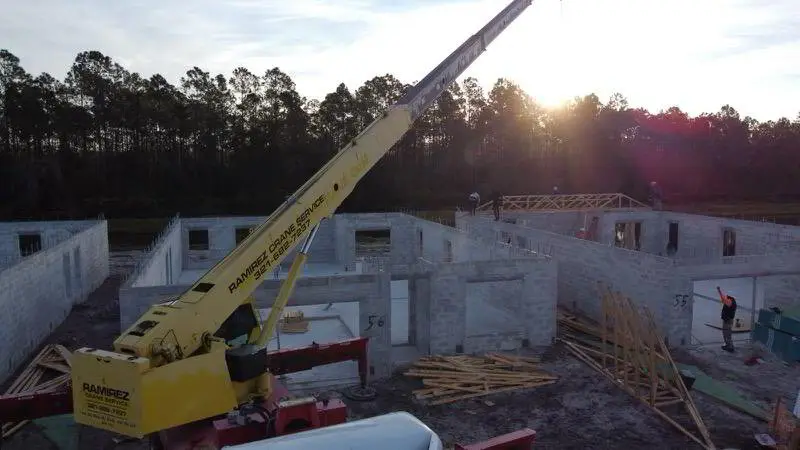

Lattice boom crawler crane lifting a vessel at a petrochemical plant along the Houston Ship Channel
Houston, Texas

NCCCO Crane Certification for Houston Port and Plant Crews

Refineries, chemical plants and the Port of Houston run on careful lifting. Here is how Houston employers and operators can prepare for NCCCO exams.

Ship Channel, Refineries and Constant Lifting

Houston's economy leans heavily on energy and trade. The Port of Houston and the Houston Ship Channel are lined with terminals, refineries and petrochemical plants, and the region's construction market adds hospitals, offices and residential towers on top of that. Cranes are part of daily life in all of it.

Plant work in particular is demanding. Turnarounds, when units are shut down for maintenance, pack a huge amount of lifting into a short window with many crews working at once. NCCCO crane certification in Houston is often a basic requirement just to get badged onto those sites, and plant owners commonly expect certified riggers and signal persons as well.

Credentials Plant Owners Ask For

Every facility sets its own prequalification rules, but these are the credentials we see requested most often for Gulf Coast industrial work:

  • Mobile crane operators with the right designations: TSS or TLL for hydraulic cranes and LAT for lattice crawlers. Experienced operators can prepare through the mobile crane certification prep program.
  • Riggers at Level I or Level II, prepared through our rigger qualification and certification program.
  • Signal persons who can direct blind lifts inside crowded process units.
  • Supervisors who understand lift planning, critical lift procedures and inspections, which the Managing Crane Safety class covers.

If your company also needs equipment inspected, see our crane inspection services in Texas.

Gulf Coast Heat, Storms and Soil

Houston summers are long, hot and humid, and heat stress is a real hazard for crews in the field. Atlantic hurricane season runs roughly June through November, and tropical storms can bring flooding rain even without a direct hit. Crews need a plan for lowering or securing booms well before a storm arrives.

The ground matters too. Much of the area sits on clay soils that soften when saturated, so outrigger mats, cribbing and ground assessments are not optional after heavy rain. Our article on crane safety in extreme weather covers several of these issues.

Texas Follows Federal OSHA Crane Rules

Texas is not among the states commonly cited for a separate state crane operator license. Federal OSHA rules govern construction lifting there, including operator certification under 1926.1427 and signal person qualification under 1926.1428. Plant owners and contractors frequently set stricter requirements, so check with each site before you mobilize. Our Texas crane school page has more statewide information.

Keep copies of certification cards and training records organized for site prequalification reviews and audits.

On-Site in Houston or at Our Florida Campus

The Crane School has no Houston office. For groups, we send instructors to your yard or facility, teach the classroom portion, coach hands-on practice and, through our NCCCO accredited examiners, give practical exams on-site. Scheduling training before a planned turnaround is a common approach, so your crews arrive certified and ready.

Individuals can travel to Seffner, near Tampa, for open-enrollment classes. CCO written exams are offered there every month, and the mobile crane prep program runs Friday through Monday once a month. Ask about our written-exam guarantee when you enroll. Tampa International is the closest major airport, and there are regular flights from both Houston airports.
Frequently Asked Questions

Can you train our crew before a refinery turnaround?

Yes. Tell us your turnaround date, crew size and the credentials the site requires, and we will look for on-site dates ahead of it.

Which certification covers crawler cranes used in Houston plants?

Lattice boom crawler and truck cranes fall under the NCCCO LAT designation. Hydraulic telescopic cranes use TSS or TLL.

Do Houston riggers need NCCCO certification?

OSHA requires qualified riggers for certain work, and many plant owners require NCCCO rigger certification as a site rule. Check each facility's requirements.

The Crane School

Training Programs & Services

All programs are delivered in compliance with current OSHA regulations.

Mobile Crane Operator Certification Prep Program

For experienced operators ready to certify or recertify. Includes NCCCO TSS, TLL and LAT written and practical exams.

Learn more about Mobile Crane Certification Prep

Initial Mobile Crane Operator Training Program

For people with little or no crane experience. 3-week (TSS/TLL) and 5-week (adds LAT) programs with NCCCO exams.

Learn more about Initial Mobile Crane Training (3 & 5 Week)

Articulating Crane Operator Certification Prep Program

For knuckle-boom operators. Prepares you for the NCCCO ABC, ABL and ABW written and practical exams.

Learn more about Articulating Crane Certification Prep

Rigger Qualification / Certification Program

For personnel who rig loads to cranes — supports your rigger qualification and NCCCO Rigger Level I/II exams.

Learn more about Rigger Level 1 & 2

Signalperson Qualification / Certification Program

Standard hand and voice signals for directing cranes, plus preparation for the NCCCO Signalperson exams.

Learn more about Signalperson

Managing Crane Safety Class

For managers and supervisors: OSHA compliance, lift planning, inspections, certification and liability.

Learn more about Managing Crane Safety

Telehandler Operator Program

Certification or recertification for telehandler operators. Includes the NCCCO THO written and practical exams.

Learn more about Telehandler Operator

Crane Inspection Services

Annual, monthly, post-assembly and post-incident inspections plus load testing by NCCCO-certified inspectors.

Learn more about Crane Inspections

Related Reading

Service

Crane Inspection Service in Texas

NCCCO-certified inspectors for mobile, tower, overhead and articulating cranes in Texas. Annual, monthly and post-incident inspections. Request a visit.

Crane Operator Practice Test

Ten quick questions on crane safety rules and NCCCO basics. Pick one answer per question — your score shows on the next page.

1. Which OSHA standard covers cranes and derricks used in construction?
2. How long is an NCCCO crane operator certification valid before recertification?
3. What does NCCCO stand for?
4. Under OSHA's current construction crane rule, operator certification must be obtained by:
5. Under OSHA Table A (1926.1408), what is the minimum clearance from power lines rated up to 50 kV?
6. When is a signal person required?
7. Whose emergency stop signal must a crane operator obey?
8. What does an anti-two-block device prevent?
9. Which document gives a crane's rated capacity for a given boom length and radius?
10. Which NCCCO designation covers telescopic boom cranes with a swing cab?