
Crane Work Along the I-95 Corridor
Richmond sits where Interstate 95 meets I-64, and that crossroads keeps a steady mix of lifting work moving: distribution warehouses in Henrico and Chesterfield, hospital and university additions downtown, bridge and utility work along the James River, and steel erection for mid-rise commercial buildings. Most of these jobs run on telescopic hydraulic cranes, with articulating boom trucks delivering materials and setting rooftop units.
If you run or manage that kind of work, NCCCO crane operator training for Richmond crews comes down to two practical choices. Either our instructors and examiners come to your facility, or your operators make the trip to Seffner, Florida. The Crane School has no Richmond office, and we won't pretend otherwise.
Bringing the Class to Your Richmond Facility
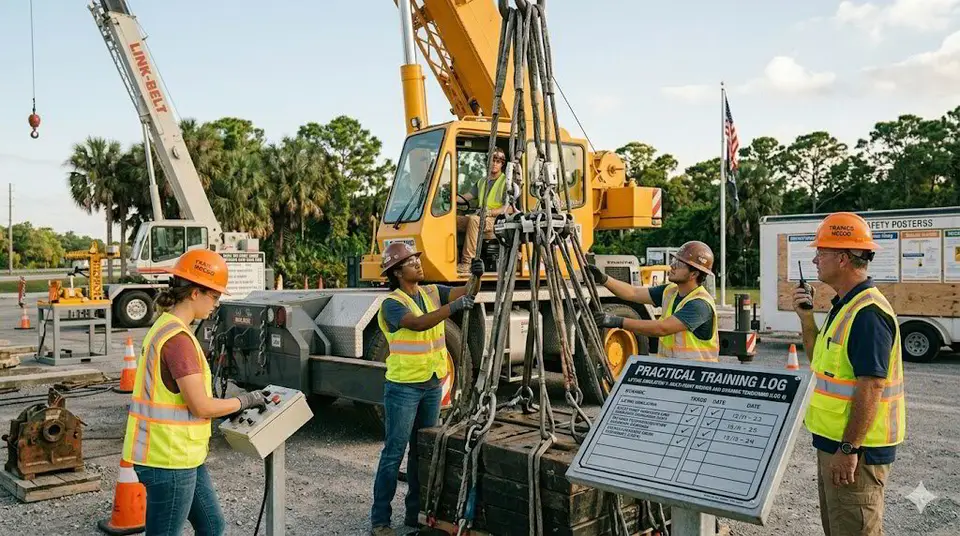
Hosting a class pays off once roughly four or more people need the same card, provided you can supply a crane, flat ground for the test course and somewhere to hold classroom sessions. Because our instructors are NCCCO certified and our team includes accredited practical examiners, the hands-on test can happen right on your property.
Here is how a typical on-site plan comes together:
- First, you tell us the crane types in your fleet and how many people need a new card or a renewal.
- Next, we pair that with the right course; experienced hands usually fit the weekend mobile crane prep.
- We confirm what equipment and space the practical exam course needs.
- Classroom review, practice, and testing are scheduled around your production calendar.
Summer in Richmond brings heavy humidity and afternoon storms that can shut down a pick with little warning. Where possible, we put yard sessions early in the day and leave slack in the schedule for weather.
When Traveling to Seffner Makes More Sense
Seffner tends to be the better choice for a lone operator or for someone switching careers who has never run a crane. Our campus lies east of Tampa, and flights from Richmond into Tampa International, the nearest major airport, are straightforward. Prep weekends for mobile cranes happen monthly from Friday through Monday, and the headquarters holds CCO written testing every month too.
Beginners can choose a three- or five-week initial course that builds the basics first, then leads to TSS and TLL testing, with LAT added on the longer track. Check the current class calendar before booking flights.
Keeping Richmond Operators Current
CCO certifications are valid for five years, and a lot of Richmond-area operators who certified when OSHA's rule took effect have since cycled through renewal. Start renewal prep during the card's last year so that a scheduling clash or a retest does not take you off the job.
For an experienced operator, renewal is usually a shorter commitment than initial certification. The classroom review focuses on load charts, updated regulations and the written exam content, while the practical exam confirms you can still handle the machine smoothly. When several cards come due in the same year, an employer can bundle those operators into a single Richmond-area session rather than flying them to Florida separately. Expect the physical card within a few weeks of passing; the MyCCO app shows results as well.
Licensing Notes for Virginia
Virginia does not appear on the usual lists of states with their own crane operator licenses, which leaves federal OSHA in charge of construction crane work in the Richmond area. OSHA's certification standard, 1926.1427 (opens in a new tab), ties each operator's credential to the crane type, and an employer can always ask for more. Statewide options are on our Virginia NCCCO prep page; keep in mind that NCCCO grants the credential, not The Crane School.