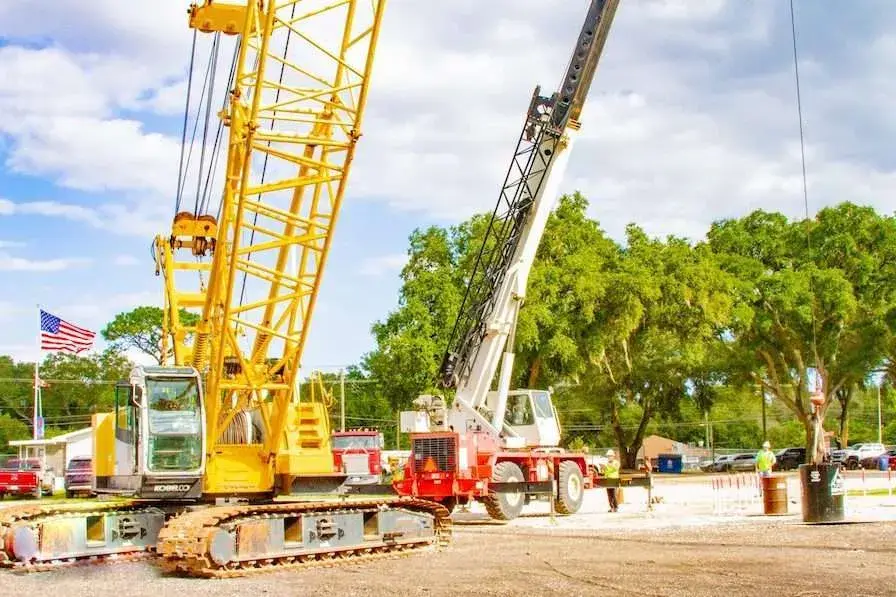
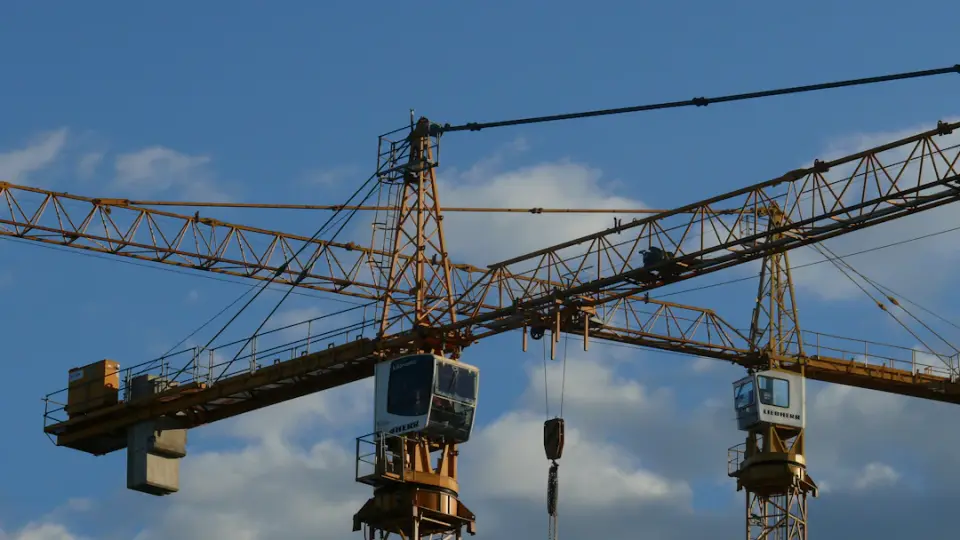
Large mobile crane setting rooftop equipment at a data-center construction site in Northern Virginia
Northern Virginia

Crane Operator Certification Training for Northern Virginia and the D.C. Area

Data-center, high-rise and infrastructure crews across Arlington, Fairfax and Loudoun counties can prepare for NCCCO exams on-site or at our Florida campus.

Lifting Work Across the D.C. Suburbs

Northern Virginia has become one of the country's best-known markets for data-center construction, especially in Loudoun County. Those projects involve repeated heavy picks of generators, chillers, switchgear and precast panels, often on tight schedules with several cranes working at once.

Closer to the Potomac, Arlington and Fairfax see office and residential towers, transit and highway work, and federal facility projects. That mix keeps tower cranes, large all-terrain cranes, telehandlers and boom trucks busy, along with the riggers and signalpersons who support them.

Matching Programs to NoVA Job Sites

For contractors, Northern Virginia crane operator training usually means certifying several roles at once:

  • Mobile crane operators preparing for NCCCO TSS, TLL or LAT exams through the mobile crane certification prep program.
  • Telehandler operators setting materials on building decks, who can prepare for the NCCCO THO exams through our telehandler operator program.
  • Riggers and signalpersons who rig mechanical equipment and direct blind picks.
  • Supervisors and project managers, who benefit from the Managing Crane Safety class on lift planning and compliance.

We can scope a plan that combines these for one site or several.

Planning Around Congested Sites

Space is the constant problem on NoVA projects. Data-center campuses may have multiple crews working around each other, and infill sites in Arlington or Tysons can leave almost no laydown area. Exam prep for operators here should include lift planning basics: confirming ground bearing capacity, checking swing radius against neighboring structures, and coordinating with other cranes on the same site.

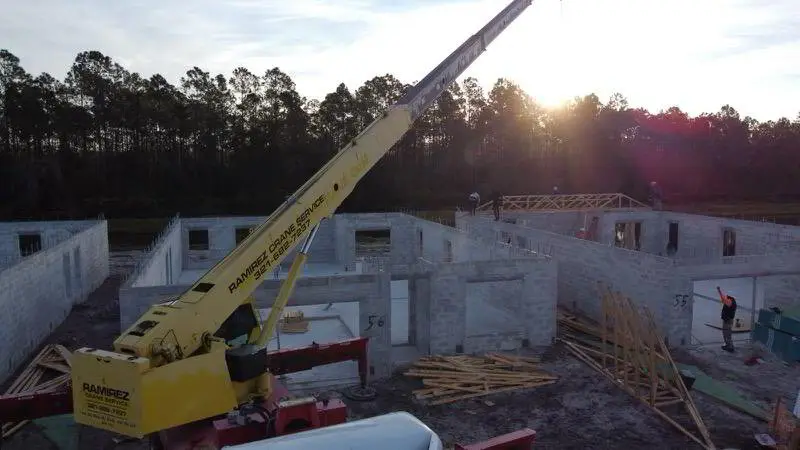
For general contractors, certifying the people on the ground is just as important. A trained signalperson who knows the standard hand and voice signals keeps blind picks predictable, and a qualified rigger reduces the guesswork when mechanical units arrive with unfamiliar lifting points. Training these roles together on your own site lets the class use the equipment and conditions your crew actually works with, which is one of the main advantages of on-site delivery. Our blog post on onsite crane training explains how these sessions run.

Working Inside the District

Many Northern Virginia companies cross the river for projects in Washington, D.C. itself. D.C. is commonly cited as having separate city-level crane operator requirements in addition to OSHA. Confirm current rules with the District's licensing agency and NCCCO's state and city licensing information before you work there.

On the Virginia side, there is no separate state crane license, so federal OSHA standards apply, including the operator certification requirement (opens in a new tab). Employers may set stricter rules. Our Virginia statewide page covers other parts of the Commonwealth.

On-Site Delivery or a Trip to Seffner

The Crane School has no office in Northern Virginia. Instead, our instructors and accredited practical examiners travel to your yard or project site when you have a group and suitable equipment. Summer heat, thunderstorms and the occasional winter storm all factor into scheduling.

Operators who prefer open enrollment can fly from Dulles or Reagan National to Tampa International and attend classes at our Seffner, Florida training center. Mobile crane prep runs monthly, Friday through Monday. Contact our office to compare dates. Lodging near the campus is available at a negotiated rate, so a short stay for the Friday-to-Monday prep class is straightforward to arrange.
Frequently Asked Questions

Is this page about Washington, D.C. or Washington, Virginia?

It is for employers and operators in Northern Virginia's Washington, D.C. suburbs, including Arlington, Fairfax and Loudoun counties.

Do I need anything beyond NCCCO certification to run a crane in D.C.?

Washington, D.C. is commonly cited as having its own crane operator requirements. Check with the District's licensing agency and NCCCO's licensing information before taking work there.

Can you run practical exams on an active data-center site?

Possibly, if the site can provide a safe, separate test area and the required equipment. We review the layout with you before scheduling.

Do you offer training for lift supervisors in Northern Virginia?

Yes. The Managing Crane Safety class covers OSHA compliance, lift planning, inspections and responsibilities for management personnel, and it can be delivered on-site.

The Crane School

Training Programs & Services

All programs are delivered in compliance with current OSHA regulations.

Mobile Crane Operator Certification Prep Program

For experienced operators ready to certify or recertify. Includes NCCCO TSS, TLL and LAT written and practical exams.

Learn more about Mobile Crane Certification Prep

Initial Mobile Crane Operator Training Program

For people with little or no crane experience. 3-week (TSS/TLL) and 5-week (adds LAT) programs with NCCCO exams.

Learn more about Initial Mobile Crane Training (3 & 5 Week)

Articulating Crane Operator Certification Prep Program

For knuckle-boom operators. Prepares you for the NCCCO ABC, ABL and ABW written and practical exams.

Learn more about Articulating Crane Certification Prep

Rigger Qualification / Certification Program

For personnel who rig loads to cranes — supports your rigger qualification and NCCCO Rigger Level I/II exams.

Learn more about Rigger Level 1 & 2

Signalperson Qualification / Certification Program

Standard hand and voice signals for directing cranes, plus preparation for the NCCCO Signalperson exams.

Learn more about Signalperson

Managing Crane Safety Class

For managers and supervisors: OSHA compliance, lift planning, inspections, certification and liability.

Learn more about Managing Crane Safety

Telehandler Operator Program

Certification or recertification for telehandler operators. Includes the NCCCO THO written and practical exams.

Learn more about Telehandler Operator

Crane Inspection Services

Annual, monthly, post-assembly and post-incident inspections plus load testing by NCCCO-certified inspectors.

Learn more about Crane Inspections

Related Reading

Training Program

Telehandler Operator Certification Program

Telehandler certification prep for the NCCCO THO written and practical exams, fixed or rotating. Certify or recertify. Join the list for upcoming dates.

Crane Operator Practice Test

Ten quick questions on crane safety rules and NCCCO basics. Pick one answer per question — your score shows on the next page.

1. Which OSHA standard covers cranes and derricks used in construction?
2. How long is an NCCCO crane operator certification valid before recertification?
3. What does NCCCO stand for?
4. Under OSHA's current construction crane rule, operator certification must be obtained by:
5. Under OSHA Table A (1926.1408), what is the minimum clearance from power lines rated up to 50 kV?
6. When is a signal person required?
7. Whose emergency stop signal must a crane operator obey?
8. What does an anti-two-block device prevent?
9. Which document gives a crane's rated capacity for a given boom length and radius?
10. Which NCCCO designation covers telescopic boom cranes with a swing cab?